ContactMonkey’s Global State of Internal Communication (GSIC) 2026 Report revealed that the number one focus area for internal communicators is artificial intelligence in the workplace (57%). And with IC teams reporting a moderate influence across key organizational outcomes, including driving company culture, reaching a dispersed workforce, and enabling people managers, it makes sense to explore how AI fits into the employee onboarding experience that produces these outcomes.
Employee onboarding shapes how quickly new hires ramp up, how connected they feel to their team, and how long they decide to stay. At the same time, HR and internal communications (IC) teams are under pressure to do more with less, supporting global, hybrid, and frontline workforces while keeping information accurate, timely, and personalized.
AI offers a way to close that gap. Used strategically, it can automate repetitive tasks, tailor content by role and location, and surface insights that would otherwise be impossible to spot at scale. But without the right guardrails, AI introduces significant risks, including policy errors, privacy concerns, and out-of-context messages that damage trust.
This guide explores how to use AI thoughtfully across the employee onboarding journey: where it helps most, where it can fail, the best communication-focused use cases, and the prompts, guardrails, metrics, and tool criteria that keep your program both efficient and human-centered. By the end, you’ll have a practical operating model for weaving AI into onboarding to strengthen the connections that matter most.
What is AI-Powered Employee Onboarding?
AI-powered employee onboarding is the strategic use of machine learning, natural language processing, and automation to coordinate personalized, responsive, and data-driven onboarding experiences for new hires. It supports personalization at scale for HR and IC pros in ways that a traditional, manual employee onboarding workflow can’t. When used effectively, AI-powered employee onboarding supports the irreplaceable human touchpoints that technology can’t replicate.
AI for onboarding task automation vs. AI for onboarding communications
When referring to AI-powered employee onboarding, there are two distinct use cases worth considering:
- Task automation (the HR engine): You can use AI to automate backend logic that triggers necessary onboarding tasks, including shipping equipment, creating email aliases, and HRIS employee profile creation. These often time-consuming tasks must occur when an employee joins an organization. Using AI to automate them creates efficient workflows and reduces the cognitive load of completing them manually.
- Onboarding communications (the heart of the employee onboarding experience, supported by IC): You can use AI in communications to increase engagement, personalize journeys, and offer immediate support for lower-stakes questions. While these can increase efficiency for HR and IC teams, the focus of these use cases centers around improved experiences for new hires.
Both use cases are helpful, but the remainder of this guide focuses on the onboarding communications aspects designed to improve the employee experience.
Where does AI have the biggest impact on employee onboarding?
AI in employee onboarding is most helpful across the following areas:
- Speed: Using AI-powered tools, particularly AI chatbots for low-stakes questions, can significantly improve the time to clarity for new hires. In other words, AI can help reduce the time new employees spend waiting for answers, which is particularly valuable for organizations with understaffed HR and IC teams. We’re not referring to “speed” as in rushing the employee onboarding process with low-quality information or forcing new hires to ramp up quickly, but rather to increasing speed when it benefits new hires.
- Personalization: AI-powered experiences offer more opportunities to personalize communications, tailor learning journeys, and provide content for different learning styles. Considering critical factors, including role type, seniority, and team, and providing personalized content equips employees with the information they actually need to do their jobs well.
- Consistency: Employee onboarding doesn’t sit with HR and IC alone. Managers play a crucial role in the experience. With many key contributors participating in the employee onboarding process, it’s important to prioritize consistent messaging to avoid confusion and disjointed focus. AI can cross-check messaging for better organizational consistency.
- Self-serve answers: While some onboarding questions require human responses, AI-powered bots or conversational AI tools can answer general questions. When these tools provide accurate answers, they can boost new hires’ confidence and help them move forward in the onboarding process without delay.
Where can AI fall short in employee onboarding?
Like all tools and technologies, AI presents unique challenges worth considering before adding AI-powered workflows into your onboarding process, including:
- Hallucinations and policy errors: If AI hallucinates incorrect information, including policy errors, it creates significant trust (and potentially legal) issues. Imagine AI mistakenly sharing information about a 401(k) matching policy that doesn’t exist and having to explain to a new hire that the information is incorrect. Inaccurate company policies, employee benefits, and other sensitive information can have serious consequences.
- Out-of-context messaging: Automated messages sent to the wrong people at the wrong time not only create confusion but also make employers look bad. While automation has its perks, effective automation processes require deep emotional intelligence and oversight, especially when scheduled messages need to be rescheduled or canceled.
- Privacy and data ethics: People have different opinions on AI usage. They may not feel comfortable using AI tools, or want to understand whether their data is private and how the organization will use the information they share with AI tools. Organizations must be transparent about how they use employee data.
The 5 Best Use Cases for AI in Employee Onboarding
For IC and HR professionals using AI in employee onboarding, identify use cases that eliminate administrative friction, creating more space for human-to-human interactions. The following use cases improve typical onboarding pain points, but they don’t remove the deeply human connection points that support onboarding.
1. Design personalized onboarding experiences by role type
AI-powered onboarding helps avoid the one-size-fits-all experience that makes new hires feel like just another cog in the wheel. When everyone receives the same generic setup guides and information, much of it can feel irrelevant to their role. By using AI to segment content delivery, organizations can tailor what each person sees based on their responsibilities, level, and team. Personalized experiences create immediate relevance and help employees quickly understand what matters most for their success.
This kind of personalization directly reduces cognitive load and speeds up time-to-productivity. Instead of asking people to wade through a 20-page handbook or a bloated onboarding portal, AI can surface a curated, role-specific “must know” list. New hires spend less time hunting for answers and more time engaging with the people who will shape their experience, leading to faster ramp-up, clearer expectations, and a smoother, more supportive start.
2. Launch conversational AI (chatbots) for immediate assistance
AI-powered chatbots help remove the first-week friction many new hires feel. Early on, people often hesitate to ask what they perceive as small or obvious questions about pay cycles, office logistics, or where to find key resources because they don’t want to appear unprepared or dumb. Conversational AI gives them a judgment-free place to ask anything, anytime, and get instant answers. That safety net reduces anxiety and helps new employees move through their first days with more momentum.
Chatbots are also a powerful way for HR and IC teams to protect valuable time and energy. Instead of repeatedly answering the same basic questions, teams can deflect common inquiries to AI and focus their effort on critical relationship-building moments that actually shape culture and connection. Automation handles the repetitive “How do I…?” queries, while humans stay focused on the nuanced, emotional, and strategic work that no technology can replace.

3. Create data-driven onboarding pathways based on feedback
Instead of waiting until after onboarding to learn that something isn’t working, AI can continuously analyze signals from pulse surveys, quick check-ins, and onboarding feedback. When it detects recurring themes, it can prompt managers to reach out in real time. Or, for organizations that don’t want to hand over detection to AI, HR and IC pros can use AI to analyze feedback and spot concerns themselves. Either way, that kind of timely, attentive response makes new hires feel seen and supported by the organization.
This turns onboarding into an early-warning intelligence source rather than a post-mortem retrospective, providing HR and IC with valuable real-time data. Rather than reacting to turnover after it happens, they can spot risks early, adjust messaging or workflows, and equip managers with the right follow-ups. Over time, these data-driven insights help close expectation gaps, strengthen culture, and prevent silent attrition by addressing issues before it’s too late.
4. Build manager enablement kits at scale
In many organizations, a new employee’s first few weeks depend heavily on how organized, available, and onboarding-savvy their manager is. AI can level the playing field by providing managers with structured, real-time support, including nudges, checklists, talking points, and feedback prompts, so even the busiest leaders have a clear roadmap for welcoming and ramping up a new team member with some level of consistency.
For HR and internal comms teams, this directly addresses one of the biggest bottlenecks in onboarding: inconsistent manager follow-through. By automating reminders and packaging best practices into easy-to-use enablement kits, AI helps ensure the company’s culture, expectations, and key messages are delivered reliably across every department. Additionally, AI makes it easier for HR and internal comms teams to push updates to manager enablement kits for ongoing improvement. The result is a more equitable, predictable onboarding experience where great manager-led moments are the norm, not a matter of landing one of the better managers.
5. Provide multilingual onboarding communication support for global teams
AI can close the gap for global teams by removing the translation bottlenecks that leave international hires feeling like an afterthought. Instead of waiting weeks for translated materials or relying on tools that strip nuance, AI can deliver welcome messages, benefits guides, and onboarding resources in an employee’s primary language while preserving the company’s voice. When people receive clear, on-brand information in their native language, it sends a powerful signal that they are valued members of the organization from day one. One important note here: human oversight and review remain critical because no systems are perfect at this.
Multilingual AI support is both an inclusivity win and a risk reducer for HR and IC pros. It makes it easier to ensure that critical safety, compliance, and policy information is understood accurately across regions, without the delay of fully manual translation workflows. This combination of speed, accuracy, and cultural sensitivity helps create a more equitable onboarding experience for global talent and builds trust by showing that language is never a barrier to belonging or understanding company expectations.
What Are the Best Practices for Using AI in Employee Onboarding?
Consider the following best practices for using AI in employee onboarding to preserve trust while reaping the benefits of improved processes and increased email personalization.
Human-in-the-loop review points (what you must check every time)
AI can accelerate first drafts and standardize information, but it still lacks the context, empathy, and judgment that HR and IC pros bring to the table. Certain moments in the onboarding journey should always have a human in the loop, especially when tone, trust, and long-term expectations are on the line.
What always requires human review:
- Sensitive milestones and high-stakes topics: Any communication that touches compensation, equity, performance expectations, or policy needs human review every time, without exception. These messages carry emotional and legal weight. A human editor can ensure the wording is accurate, compassionate, and aligned with your organization’s values, reducing the risk of misunderstandings that damage trust early on. Accuracy is absolutely critical for all sensitive messaging.
- Tone checks for welcome communications: AI-generated welcome emails, manager introductions, and first-day messages can easily veer into language that feels too corporate, robotic, or unnaturally enthusiastic. IC pros should review these messages to ensure they fit your organization’s voice, tone, and culture. A quick tone check helps preserve your brand voice and makes new hires feel they’re joining a real team of humans.
- Final approvals for automated campaigns: No onboarding sequence, trigger-based email, or chatbot workflow should go live without a designated human sign-off. This last review helps catch out-of-context messages to confirm that the right people are getting the right message at the right time.
These are just a few examples where human oversight is necessary, but no two organizations are the same. In addition to the above, teams should create their own guidelines for human-in-the-loop review points, identifying all workflows that require human review and who owns each workflow (HR, IC, or other teams).
By clearly defining where humans must step in, you get the best of both worlds: AI handles the repetitive drafting and logistics, while HR and IC ensure that every critical touchpoint still feels thoughtful, accurate, and genuinely human.
Source grounding rules (policy links, HRIS fields, single source of truth)
The biggest risk of AI in employee onboarding is hallucination — when the system confidently provides incorrect or outdated information. Even a small mistake about benefits, policies, or role expectations can create confusion, damage trust, and, in some cases, introduce legal risk. To prevent this, you must ground AI tools in your organization’s verified sources of truth and design them to default to routing to a human when they lack information rather than fill in gaps incorrectly.
Consider these key practices for grounding AI and increasing reliability:
- Define a single source of truth: AI should only answer employee onboarding questions based on a clearly defined set of authoritative sources. These sources might include your official employee handbook, up-to-date policy documents, and live HRIS data. If the system can’t find an answer in those locations, it needs to be configured to avoid guessing. Instead, it should state its lack of knowledge and point an employee toward a human with a response like, “I’m not sure about that. Let me connect you with HR,” or surface an escalation path to a human. This protects employees from receiving misleading guidance and reinforces the importance of accuracy over speed, a critical component of building trust for the long haul.
- Link back to the original policies in every answer: Any AI-generated response that touches policy, benefits, compliance, or employment terms should include a direct link to the underlying source, such as the relevant intranet page, policy PDF, or knowledge base article. These embedded links give new hires an easy way to verify what they’re reading and understand any nuances that don’t fit into a short answer. This habit also builds transparency because employees can see that the AI is surfacing information from your official documentation. Importantly, encouraging employees to verify AI-generated responses by reviewing the links AI tools provide is a good behavior you want to build from day one.
- Run regular “stress tests” and audits: At least once a quarter, HR and IC teams should deliberately test AI tools using real-world onboarding questions. These stress tests help you confirm that the AI is pulling from current policies, not outdated versions, and that recent changes have been captured correctly. When you spot incorrect or incomplete answers, you can fix the underlying content or update the AI’s access rules before a new hire encounters the issue.
By grounding AI in a small set of trusted sources, always linking back to them, and regularly auditing them, you can reduce the risk of hallucinations. New hires get fast, self-serve answers they can rely on, and HR and IC teams can trust that AI is reinforcing official policies. Just remember that there will always be exceptions to the rule, and your AI tools may never perform with 100% accuracy. Have processes in place to address issues before they arise.
Privacy and data minimization (what not to feed into AI)
Just because AI can process a piece of information doesn’t mean it should. In employee onboarding, the stakes are even higher because you’re handling personal information at a moment when trust is still building and is often fragile. Protecting new hire privacy is both a legal requirement and a cultural signal about how seriously your organization treats employee data. Strong data minimization practices promote the usefulness of AI without making it feel invasive.
Here are core principles for privacy-safe AI onboarding:
- Stick to the “need to know” rule, always: AI should only receive the minimum data required to perform a specific task. For example, AI may need a name, role, team, and location to draft a personalized welcome email, but never a home address, a social security number, or a full compensation breakdown. Define clear data fields for each workflow and develop a habit of avoiding providing more information than necessary. The less sensitive data you expose to AI, the smaller your risk surface.
- Anonymize wherever possible: When using AI to analyze onboarding surveys, feedback forms, or sentiment, prioritize aggregation and anonymization. Configure your workflows so that the AI assesses de-identified data (e.g., summary scores or themes) rather than individual names or employee IDs. And communicate deanonymization processes to employees so they understand exactly what to expect. This helps new hires feel safe being honest about their experience and reduces the risk that sensitive comments will be traced back to specific people.
- Enforce zero retention and usage limits with vendors: Review all AI technology providers’ data policies carefully. Choose tools that offer zero-retention or private instance options, meaning they will never store employee data longer than necessary and will never use your data to train public models. Ensure contracts and DPAs explicitly state that proprietary employee information (including HRIS data, feedback, and communications) will be used solely to support your organization, not for general AI improvement.
- Document and communicate what’s in scope: Privacy is both a backend configuration problem and a trust and transparency issue. Clearly document what data AI can access, how that data is protected, and what it will never be used for (e.g., performance ratings or disciplinary decisions). Share this information with new hires and managers in plain language so they understand the boundaries. When people know that sensitive details are out of bounds for AI, they’re more likely to engage with the tools without censoring their inquiries.
By limiting inputs to what’s truly necessary, anonymizing feedback, and choosing vendors with strong zero-retention practices, you can unlock the benefits of AI-powered onboarding without compromising privacy.
Escalation paths (when AI should hand off to a human)
When a question is too complex, sensitive, or when an employee is clearly frustrated, AI systems need a clear way to pull humans in quickly. Well-defined escalation paths prevent AI from becoming a dead end and ensure that new hires get real help when they need it most.
Consider the following when developing your internal escalation paths:
- Creating a trigger for nuanced and sensitive situations: Some topics are too complex or personal for AI to handle. Medical leave scenarios, accommodations, harassment concerns, and manager conflicts are examples where AI should never try to address an inquiry. When a new hire asks a question that touches on these areas, AI should immediately route the conversation to a human. That can look like: creating a prioritized ticket, offering a direct email or chat link, or assisting with scheduling a follow-up conversation. The goal is to make escalation feel seamless and supportive, not reprimanding or inconvenient.
- Implementing triggers to catch when someone is stuck: AI can also monitor signals that an employee is not getting what they need. If a new hire repeats a question, uses words that indicate confusion or frustration, or provides negative feedback on an answer, the system should recognize the shift in sentiment and offer an immediate handoff. This avoids repeated, unhelpful loops and shows the employee that the organization is paying attention. It’s important to tread lightly here, as routing to human assistance can come across wrong if an employee isn’t feeling frustrated.
- Labeling systems clearly so employees know who they’re talking to: Transparency is non-negotiable. Employees should always know when they’re interacting with AI versus a human. Clear labels like “AI Assistant” in chat interfaces and prominent disclosures in emails set proper expectations. When people know they’re talking to a bot, they better understand the steps it takes, including when to involve humans.
- Promoting visible, simple paths back to humans, every time: Beyond automated triggers, there should always be an obvious manual escape from AI, such as a “Contact HR” button, a “Talk to someone on the comms team” link, or instructions for reaching IT or a manager for technology or personal issues, respectively. Don’t make new hires guess how to reach out to a human. Make these options prominent in onboarding portals, chatbot flows, and emails.
By defining clear escalation triggers, labeling AI interactions transparently, and making human help easy to reach, you ensure AI remains a helpful bridge. New hires learn that while AI can answer many questions quickly, they can always reach a human when it matters most.
Prioritize irreplaceable human connection
Never overindex on AI during employee onboarding. AI can serve as a behind-the-scenes coordinator, creating space for managers, colleagues, and leaders to build real relationships with new hires. Organizations that prioritize AI-powered employee onboarding without accounting for the latter compromise the onboarding experience.
Design AI employee onboarding usage to protect and amplify human moments, not compete with them by:
- Identifying and protecting human-led milestones: Some experiences are too important to automate. Think the first-day welcome lunch, the first 1:1 with a manager, and the introduction to a peer buddy. These moments offer opportunities to assimilate and get to know new team members on a deeper, personal level. Outline which of these milestones are human-only inside your organization and communicate them clearly to everyone involved, including managers, team leads, HR teams, and culture-focused roles.
- Using AI as a facilitator only: AI can handle the logistics that get in the way of humans showing up well. For example, instead of a manager spending 20 minutes hunting for a time slot for a first-day lunch, an AI-powered scheduling tool can review calendars and propose a few options. It may even generate calendar invites, reminders, and proposed agendas for a more structured lunch. But the actual conversations and interactions must come naturally from the people taking part in the experience. Avoid relying on AI tools to drive conversations or spark participation.
- Creating natural micro-moments of connection: AI can surface timely nudges that prompt humans to reach out in thoughtful ways. For example, an AI-powered employee onboarding tool might notify a manager when a new hire completes their training program and encourage the manager to send a personal note or offer an in-person congratulatory message. These prompts help teams build habits of recognition and support without automating them entirely, ensuring personal touches along the way.
- Designing warm handoffs from digital to human: Use digital interactions to provide clear paths back to humans. If a new hire explores the company’s history on a portal and expresses interest in learning more, the AI-powered tool might suggest and help schedule a coffee chat with a long-tenured colleague, or offer times to attend a small-group Q&A with leadership. Use AI to create more thoughtful human moments. You want new hires to reflect on how many memorable touchpoints they had with others throughout the onboarding process, not on how soulless it was due to strictly AI interactions.
When you prioritize human moments, AI serves as a benefit, not a forced replacement. The moments that truly matter for trust, belonging, and culture can take center stage.
Modern internal comms and measurement tools
No design or technical expertise needed. Save time, increase engagement, and dazzle your employees with fun and interactive communications.
Explore all features

AI Prompts for Employee Onboarding: Your Copy & Paste Starter Kit
If you’re new to using AI in employee onboarding, or looking for some prompts and new ideas to improve your onboarding experience, try the new employee onboarding email templates and resource creation prompts below.
Some notes before you dive in:
- [Bracketed items] are suggested fill-in-the-blanks that make the output specific to your company, new hire, or specific situation. The more you customize, the sharper the outputs.
- Some of these prompts will require deeper data sets to achieve helpful outputs. If you don’t have supporting data, you will need to rework the prompts.
Prompts for pre-boarding (first-day build-up)
Personalized “before you start” message
You are an HR communications writer. Write a friendly, scannable pre-boarding message for a new hire joining [COMPANY NAME] as a [JOB TITLE] on [START DATE].
The message should feel warm and organized. Use a brief intro paragraph, then organize action items into three clearly labeled sections:
- Section 1 — Complete before your first day: Include these items: [LIST YOUR REQUIRED TASKS, e.g., complete I-9 in Workday, sign offer letter in DocuSign, submit direct deposit info, order equipment through IT portal]
- Section 2 — Set up when your equipment arrives: Include: [LIST TECH SETUP ITEMS, e.g., install Slack, set up MFA, connect to VPN, access the onboarding portal at URL]
- Section 3 — Optional but worth doing: Include 2–3 low-pressure cultural prompts, e.g., browse our company blog, review our team page on the intranet, follow us on LinkedIn, watch our “Who we are” video at [URL].
- End with a reassurance paragraph: remind them that they don’t need to know everything on day 1, and that [HR CONTACT NAME] is available at [EMAIL] for any questions.
Tone: warm, competent, organized. Reading level: 8th grade. No bullet walls, use spacing and bold headers to make it scannable.
Pre-boarding welcome email sequence
You are an internal communications specialist writing for [COMPANY NAME], a [INDUSTRY] company with a [FORMAL/CONVERSATIONAL] brand voice.
Write a 3-email pre-boarding sequence for a new hire named [NEW HIRE FIRST NAME] who accepted an offer for the role of [JOB TITLE] and starts on [START DATE].
- Email 1 — Send within 24 hours of offer acceptance: Subject line + body. Warm, human tone. Confirm excitement, confirm start date, and set expectations for what they’ll hear from us next. Include: their hiring manager’s name ([MANAGER NAME]), and one sentence about what makes this team special.
- Email 2 — Send 1 week before start: Subject line + body. Practical focus. Cover: where to go on day 1, arrival time ([ARRIVAL TIME]), dress code ([DRESS CODE/REMOTE SETUP]), parking or transit info ([LOGISTICS DETAILS]), and what to bring or set up in advance. Offer a named point of contact ([HR CONTACT NAME + EMAIL]) for any questions.
- Email 3 — Send the evening before day 1: Subject line + body. Short, warm, energizing. 3–4 sentences max. Remind them of the start time and first touchpoint (e.g., meeting their manager, team lunch, orientation session). End with genuine encouragement.
Format each email separately with: Subject, Preview text, Body. Keep each email under 200 words. No corporate jargon.
“Your new hire is starting soon” brief for managers
You are an HR business partner writing an internal communication to a hiring manager named [MANAGER NAME], whose new hire [NEW HIRE FIRST NAME] starts on [START DATE] in the role of [JOB TITLE].
Write a concise, action-oriented email that prepares the manager. The tone should be helpful and supportive.
Include the following sections:
- What we need from you before day 1: [CUSTOMIZE: e.g., confirm workstation setup with IT, add new hire to team Slack channels, block 1 hour on your calendar for a day-1 welcome conversation, assign an onboarding buddy by DATE]
- What HR/IC is handling: Briefly list what the manager doesn’t need to worry about. [CUSTOMIZE: e.g., pre-boarding email sequence, badge/access, day-1 orientation schedule, IT equipment]
- Suggested agenda for your first 1:1:
- 5 min: warm welcome, share what excited you about hiring them
- 10 min: overview of their first 30 days and key priorities
- 10 min: introduce communication norms (how you like to work, meeting cadence, preferred channels)
- 5 min: Q&A + open door
One thing new hires say matters most: Add one sentence of research-backed advice, e.g., “New hires who feel their manager invested time in them in week 1 report 2x higher engagement at 90 days.”
Close with a warm offer of support and your contact info. Keep the whole email under 300 words.
Prompts for the first week (reduce anxiety, clarify expectations)
Day 1 welcome message
You are an internal communications manager at [COMPANY NAME]. Write a welcome message to send to [NEW HIRE FIRST NAME / a group of new hires starting today] on the morning of their first day.
This message has one job: reduce anxiety and create a sense of belonging before the day begins.
Include:
- A genuine, specific welcome (reference the team or role: [TEAM NAME / JOB TITLE])
- A brief, honest framing of what today will feel like: “You’ll meet a lot of people and absorb a lot of information — that’s normal, and you don’t need to remember everything.”
- 2–3 concrete things they can expect today: [CUSTOMIZE: e.g., orientation session at 9:00 am with HR, team lunch at noon, laptop setup with IT at 2:00 pm]
- One sentence about who to find or message if they feel lost: [ONBOARDING BUDDY NAME or HR CONTACT]
- A closing line that emphasizes belonging
Tone guidance: Think of the voice of a great manager who’s genuinely excited to have this person on the team. No filler phrases like “we’re thrilled to have you on board.” Be specific and human.
Length: 150–200 words maximum. This should read as a warm, personal note.
First week schedule and expectation-setter
You are an HR communications specialist. Write a “your first week” section for our employee onboarding guide for a new hire joining [TEAM NAME] as a [JOB TITLE].
This section should accomplish two things: (1) give a clear picture of what the week looks like, and (2) explicitly set low-pressure expectations.
Structure it as follows:
- Opening paragraph (3–4 sentences): Set the tone. This week is about listening, connecting, and orienting. Name the 1–2 things we actually want them to accomplish by Friday: [CUSTOMIZE: e.g., complete onboarding modules, meet their core team members, set up their tools].
- Day-by-day brief overview: For each day (Monday–Friday), write 2–3 sentences on the general focus and 1–2 scheduled activities. Use this input to populate each day: [PASTE YOUR DAY-BY-DAY SCHEDULE OR LEAVE BLANK FOR AI TO SUGGEST A TYPICAL SCHEDULE].
- What “success” looks like at the end of week 1: Write a short, specific list of 4–5 things. Frame them as observations and connections, not deliverables. Example: “You’ve introduced yourself to your core team members,” not “You’ve produced X.”
- A note on information overload: Include a short paragraph that normalizes the feeling of being overwhelmed and reminds them it’s expected and temporary.
Tone: warm, clear, organized. Reading level: plain English. No HR acronyms without definitions.
Week 1 reflection prompt + check-in email
You are an internal communications specialist. Write an end-of-first-week check-in message from [SENDER: HR team/hiring manager] to new hire [NEW HIRE FIRST NAME].
This message has two parts:
- Part 1 — Brief, human acknowledgment (3–5 sentences): Acknowledge that week 1 is a lot. Name something specific and real about what they probably experienced. Example: “You’ve sat through a lot of introductions, tried to remember too many names, and probably still don’t know where the good coffee is.” End with genuine encouragement.
- Part 2 — 3 simple reflection questions: These should feel like a conversation, not a survey. Keep them open and low-stakes. Suggested questions (customize as needed):
- What’s one thing that surprised you in a good way this week?
- Is there anything you were hoping to get clarity on that still feels vague?
- What would make next week feel like a step forward?
Invite them to respond by email or to bring these to their next 1:1 with their manager ([MANAGER NAME]).
Close with a warm sign-off from [HR CONTACT NAME] that reaffirms that asking questions is okay and encouraged.
Use the tone of a trusted HR partner who deeply cares. Under 200 words total.
Prompts for manager check-ins (1:1 agendas and questions)
30-60-90 day 1:1 agenda generator
You are an HR business partner. Generate three 1:1 agenda templates for a manager named [MANAGER NAME] meeting with their new hire [NEW HIRE FIRST NAME] at the 30-day, 60-day, and 90-day milestones.
New hire context: [JOB TITLE] on the [TEAM NAME] team. Their key priorities in the first 90 days are: [LIST 2–3 PRIORITIES].
For each agenda:
- Total meeting time: 45 minutes
- Format: conversational, not a performance review
- Include: 5–6 open-ended questions the manager should ask (not yes/no questions)
- Include: 1–2 things the manager should share or clarify proactively
- Include: a clear “next steps” prompt at the end
- 30-day agenda focus: Settling in, relationships, early impressions. Psychological safety and belonging check.
- 60-day agenda focus: Starting to contribute, clarity on role, surfacing blockers. Are they getting what they need?
- 90-day agenda focus: Momentum, feedback exchange (bidirectional), refining priorities for the next quarter. Beginning to think like a full team member.
Format each agenda as a simple, clean document that a manager could print or pull up on their phone. Include time allocations. Use plain, human language. Include a brief note at the top of each agenda reminding the manager that their role in these meetings is to listen more than to speak.
New hire 1:1 question bank
You are an organizational development specialist. Create a question bank of 25 open-ended 1:1 questions for managers to use with new hires during their first 90 days at [COMPANY NAME].
Organize the questions into the following thematic groups with 5 questions each:
- Group 1 — Connection and belonging: Questions that help the manager understand how included and welcomed the new hire feels.
- Group 2 — Clarity and role understanding: Questions that surface confusion, unmet expectations, or gaps in role clarity without putting the employee on the defensive.
- Group 3 — Learning and growth: Questions about what they’re discovering, what skills they’re building, and what development support they need.
- Group 4 — Manager relationship and communication: Questions that open a bidirectional dialogue about how the manager and new hire work best together.
- Group 5 — Workload, wellbeing, and sustainability: Questions that surface early burnout signals, overwhelm, or mismatched expectations about pace without sounding like a wellness survey.
Formatting requirements:
- Each question should be genuinely open-ended (no yes/no answers)
- Avoid leading questions or questions that assume positive sentiment
- Include a brief note after each group explaining when to prioritize those questions (e.g., “Use Group 1 questions most heavily in weeks 1–3”)
- Add a manager usage tip at the top: one paragraph on how to use this bank without making 1:1s feel scripted
Prompts for policy and compliance messaging (plain language rewrite)
Plain language policy rewriter
You are an internal communications specialist with expertise in plain language writing. Your task is to rewrite a section of [COMPANY NAME]’s [POLICY NAME, e.g., Code of Conduct / Data Privacy Policy / PTO Policy] so that a new employee with no prior knowledge of our company can understand it on first read.
Original policy text to rewrite:
[PASTE ORIGINAL POLICY TEXT HERE]
Rewriting requirements:
1. Target reading level: 8th grade (use Hemingway-style simplicity)
2. Maximum sentence length: 15 words
3. Replace passive voice construction with an active voice
4. Define any technical or legal term the first time it appears in plain English in parentheses
5. Break any paragraph longer than 4 sentences into two paragraphs
6. Preserve all legally required language exactly — if a phrase must remain for legal reasons, flag it with [LEGAL REQUIREMENT — do not simplify further]
7. Add a 2-sentence “what this means for you” summary at the top of each major section
8. Where the policy requires an action from the employee, reformat as a clear imperative: “You must…” or “If X happens, do Y.”
After the rewrite, provide:
- A brief editor’s note listing any sections where the legal and plain-language goals are in tension, with a recommendation for legal review
- A readability score estimate
Do not add interpretation or opinion; stick strictly to what the policy states.
Compliance training module script
You are an instructional designer and communications writer. Write a script for a [10-MINUTE/15-MINUTE] onboarding compliance training module on the topic of [TOPIC, e.g., anti-harassment/data privacy/conflicts of interest/workplace safety] at [COMPANY NAME].
Audience: New employees across all levels and departments. No assumed prior knowledge of company policies.
Learning objectives (we want employees to be able to):
1. [OBJECTIVE 1, e.g., identify behaviors that constitute workplace harassment]
2. [OBJECTIVE 2, e.g., know the steps to report a concern]
3. [OBJECTIVE 3, e.g., understand the protection provided to reporters]
Script structure:
- Opening (60 seconds): A realistic scenario that immediately engages the employee in the stakes. Do not open with a policy definition. Open with a human situation.
- Section 1 — What you need to know (3–4 minutes): Plain language explanation of the policy. Use concrete examples. Include at least one “this is okay / this is not okay” comparison.
- Section 2 — What to do (2–3 minutes): Step-by-step process for any required action (reporting, escalating, documenting). Name the specific tools or channels at [COMPANY NAME]: [REPORTING CHANNEL, e.g., HR email, manager].
- Section 3 — What happens next (1–2 minutes): What employees can expect after taking action. Retaliation policy summary in plain language.
- Close (30 seconds): Reinforce the key message in one sentence. Provide the resource link: [POLICY URL or CONTACT].
Format as a narrator script with [ON SCREEN TEXT] callouts where text should appear on screen. Flag any section that requires legal review with [LEGAL REVIEW NEEDED].
Prompts for onboarding surveys + analysis
30-day new hire pulse survey designer
You are an I/O psychologist and people analytics specialist. Design a 30-day pulse survey for new hires at [COMPANY NAME] that is concise enough to complete in under 4 minutes and high-signal enough to surface real onboarding risks.
Survey parameters:
- Maximum questions: 10
- Mix: 7 quantitative (Likert scale) + 2 open-text + 1 demographic filter
- Avoid double-barreled, leading, or vague questions
Design the survey as follows:
1. Belonging and inclusion (2 Likert questions): Write questions that measure whether the employee feels welcomed and valued — not just present. Avoid generic “I feel included” phrasing; make it specific to the week-1-4 experience.
2. Role clarity and confidence (2 Likert questions): Measure whether they understand what success looks like in their role and feel equipped to begin contributing.
3. Manager relationship quality (2 Likert questions): Measure the quality and frequency of meaningful touchpoints with their direct manager, not just whether meetings happened.
4. Onboarding experience quality (1 Likert + 1 open-text): Measure overall onboarding quality and ask one open-text question about what would have made the experience better.
5. Open reflection question (1 open-text): “Is there anything you’d like us to know about your first 30 days that we haven’t asked about?”
6. Demographic filter (1 question): Department or team (dropdown). This allows analysis by team.
After the survey questions, include:
- Recommended Likert scale format (e.g., 1–5 with anchor labels)
- 3–4 questions to avoid and why
- Suggested send timing and distribution channel
- A note on response rate best practices for new hire surveys
Onboarding survey results-to-action
You are an HR communications and people analytics specialist. I have collected [NUMBER] responses from our [30-day/90-day] new hire onboarding survey at [COMPANY NAME]. Help me turn these results into a prioritized action plan and a leadership summary.
Please analyze the following data and open-text themes:
Quantitative scores by dimension (paste your scores here):
- [DIMENSION 1, e.g., Belonging]: [SCORE/5]
- [DIMENSION 2, e.g., Role Clarity]: [SCORE/5]
- [DIMENSION 3, e.g., Manager Relationship]: [SCORE/5]
- [DIMENSION 4, e.g., Onboarding Quality]: [SCORE/5]
- [DIMENSION 5, e.g., Tools/Systems]: [SCORE/5]
Top open-text themes I’ve identified (paste or describe):
[PASTE 3–5 THEMES OR DIRECT QUOTES, e.g., “Several employees mentioned confusion about the benefits enrollment process” or “Multiple new hires said they felt their manager was too busy to support them in week 1”]
NPS-equivalent score: [SCORE]
Response rate: [%]
Previous cohort benchmark (if available): [SCORES]
Based on this input, please generate:
1. A prioritized action list (top 5 issues, ranked by impact + feasibility): For each issue: name the problem, name the likely root cause, and suggest 1–2 concrete actions HR or IC can take within 30 days.
2. A one-page leadership summary formatted for an HR Director or CHRO: Include: headline finding, 3 strengths, 3 concerns, recommended actions, and a trend note vs. prior cohort. Use plain language.
3. A “what we heard, what we’re doing” message for new hires: A short, transparent communication (under 150 words) that summarizes what the survey found and names at least one specific change the company is making in response.
If AI is helping you draft onboarding messages faster, you still need quality control before you hit send. ContactMonkey’s AI helps you generate onboarding emails quickly and catch issues before they reach new hires.

How Do You Measure Onboarding Success When AI Is Part of the Process?
The Society for Human Resource Management (SHRM) recommends evaluating your organization’s onboarding strategies using a range of employee onboarding success metrics important to your business. When AI is part of the employee onboarding process, using a combination of SHRM’s people-focused metrics and internal communications metrics can give you a fuller picture of what’s working and what isn’t.
Take a look at how efficiency, experience, retention, and communication signals can work together to demonstrate the effectiveness of your AI-powered employee onboarding systems.
Efficiency metrics (time-to-productivity, ticket deflection, time saved)
AI’s primary value in the first week is removing friction and building institutional knowledge. We measure this by looking at how much faster a new hire can actually contribute and fulfill their role. Metrics that paint the efficiency story include:
- Time-to-Productivity: According to SHRM, the employee onboarding program strongly influences the time it takes for employees to contribute to their organization. Track the days from a new hire’s start date to the point when they can reliably hit their first performance milestone without extra supervision. Compare this before and after introducing AI-assisted workflows to see whether you’re shortening the ramp-up while still keeping it sustainable for employees.
- Ticket deflection: Measure the reduction in HR and IT inquiries once chatbots, automated FAQs, or guided help centers are in place. Fewer repetitive tickets about passwords, pay schedules, office logistics, or benefits links indicate that AI is absorbing mundane questions and providing people with fast, accurate answers.
- Administrative time saved: Estimate the hours HR, IC, and managers reclaim by using AI for drafting emails, building FAQs, scheduling meetings, and nudging follow-ups. Don’t pay attention to speed alone. Consider the strategic work your team accomplished in the time it would have taken to complete the mundane tasks. Things like coaching managers, improving content, and spending facetime with new hires to develop relationships aren’t easily quantifiable upfront, but often add significant value down the road.
Experience metrics (new hire survey results, confidence, belonging, clarity)
Efficiency shows whether onboarding is smooth; experience shows whether it actually feels supportive. When AI enters the picture, you need to know if it’s improving the human experience. Use a small set of people-focused metrics to understand how new hires perceive their first weeks and whether AI is helping close the gap between expectations and reality, including:
- Belonging and cultural alignment: Use pulse surveys and short check-ins to ask questions such as, “Do you feel like you’re part of this team?” and “Does our mission resonate with you so far?” Track how these scores move as you refine AI-powered touchpoints. Strong belonging scores signal that automation is supporting, not diluting, your culture.
- New hire confidence: Measure how prepared people feel to do their jobs throughout the first 90 days. Simple questions such as, “How confident do you feel in your ability to meet expectations in this role?” can be paired with AI to analyze open comments for themes. If AI-assisted onboarding is working, confidence should increase over time in tools and processes, as well as in relationships with managers and teammates.
- Role clarity: Use brief, AI-analyzed surveys to review whether new hires understand what success looks like. Ask, “I know what’s expected of me over the next 30 days,” or “My responsibilities match what was described during hiring.” When responses indicate confusion, AI can flag these signals and prompt managers to follow up directly with a clarifying conversation or updated resources.
Retention and commitment signals (early attrition, day 44 check-in)
Retention and commitment metrics demonstrate whether your onboarding experience is building long-term buy-in. When AI is part of the process, you need to understand whether it clarifies expectations, strengthens relationships, and prepares new hires for success. AI-powered analysis can prove particularly beneficial for surfacing resignation risks early when you pay attention to:
- Early attrition rates: Track how many employees leave within their first 60–90 days, and segment this by role, location, and manager. Spikes in early turnover often signal onboarding breakdowns: unclear expectations, culture mismatches, or hiring promises that don’t align with reality. Pair these numbers with AI-assisted analysis of exit feedback to identify themes you can fix in the onboarding journey.
- Pulse check at day 44: Research suggests that on average, organizations have 44 days to influence a new hire’s decision to stay long-term. With this timeline in mind, create a short pulse surveyasking about role clarity, manager support, workload, and overall intent to stay, then use AI to analyze open-text responses for signs of doubt or frustration. Learn from recurring themes to improve the first 44 days and build stronger retention cultures.
- Manager engagement levels: Monitor whether managers are completing the key actions in your onboarding playbook, such as reviewing enablement kits, holding structured 1:1s, sending welcome notes, and checking in during critical weeks. AI can help track completion rates and nudge managers when they fall behind. Managers can make or break employee onboarding.
Communication metrics (email reads/clicks, completion of required actions)
Communication metrics show whether employees receive and engage with your onboarding comms. When AI is part of the process, you can understand whether new hires are seeing, acting on, and positively responding to what you share and where friction still exists. Use a combination of the following:
- Open and click-through rates: Track opens and clicks on key onboarding messages, especially those related to benefits, policies, and first-week logistics. If engagement is low, AI can suggest alternate subject lines, send times, or formats, and help you test improvements.
- Required action completion: Go a level deeper by measuring whether people actually complete what’s being asked of them: signing the employee handbook, completing compliance modules, benefits enrollment, or joining welcome sessions. AI can help surface reminders and follow-ups for those who haven’t completed critical steps, turning communication from passive information into visible progress updates.
- Real-time sentiment analysis: Embed simple reactions (emoji, star ratings) or one-question check-ins into onboarding touchpoints. AI can aggregate and analyze these signals to identify friction. This gives IC and HR fast, lightweight feedback loops to refine content and tone.
- Qualitative feedback: Use AI to analyze open-ended comments from surveys, chat interactions, and feedback forms, clustering them into themes like “benefits confusion,” “tool access issues,” or “manager availability.” These qualitative measures help you go beyond surface metrics to understand why certain messages work or fail, and where you need clearer explanations or different channels.
- Channel and language performance: For global or hybrid teams, compare engagement across channels (email, chat, mobile) and languages. AI can highlight where translated or mobile-first content drives higher engagement, signaling that your onboarding is inclusive and accessible across regions and styles.
How Do You Choose the Best AI Onboarding Tool?
When choosing AI onboarding tools, understanding the system’s core capabilities, security practices, and who it’s best fit for will help you find the right ones for your organization and team. Here’s what to ask about:
Core capabilities (personalization, knowledge base grounding, integrations, analytics)
Define the core capabilities you need from an AI-powered employee onboarding tool, which might include:
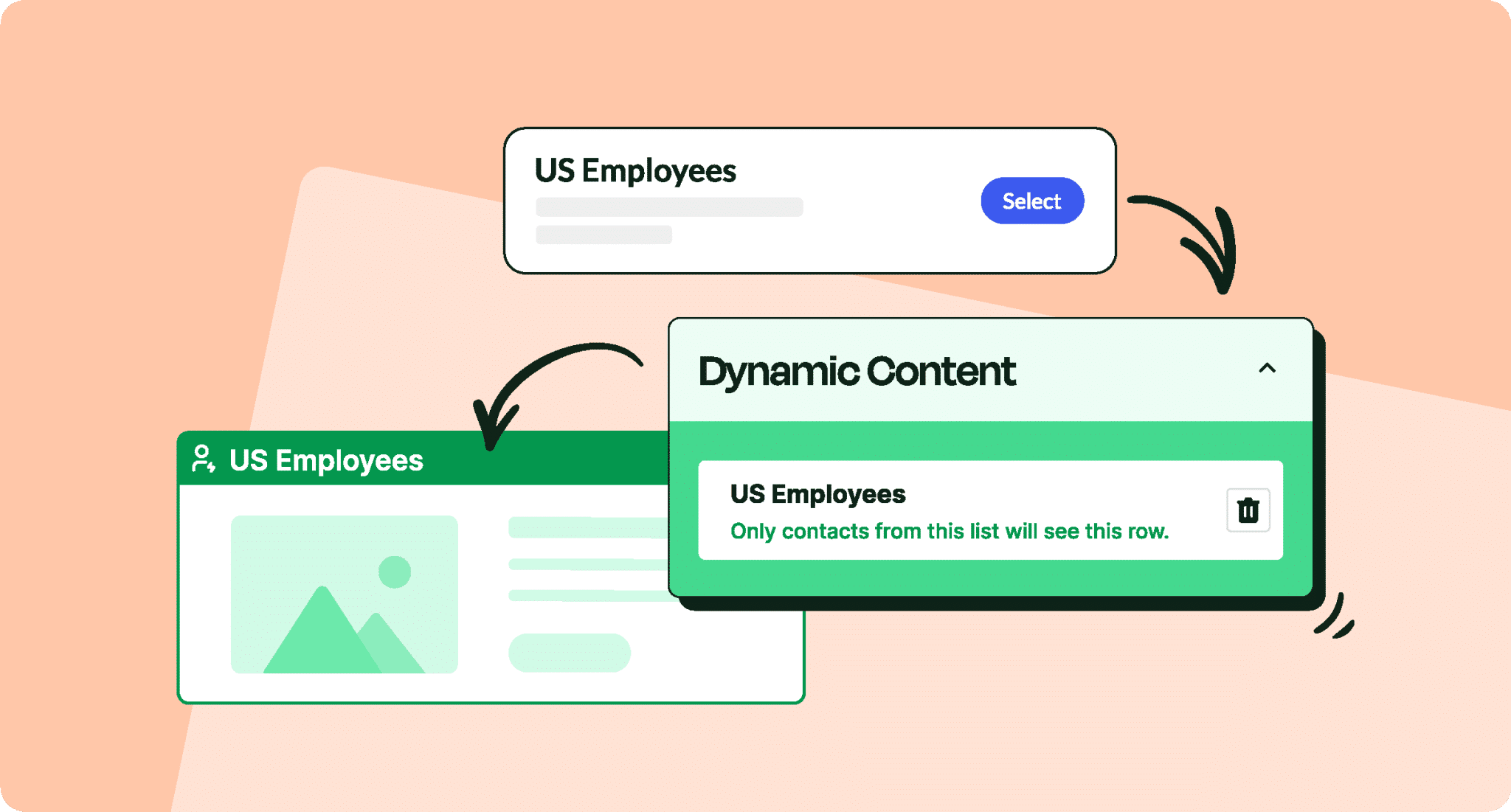
- Dynamic personalization: The tool should adapt onboarding content based on HRIS attributes such as department, location, and seniority. Or, if you’re looking for a communications-specific tool, it should offer dynamic content blocks so you can create a single communication with tailored content.
- Knowledge base grounding: Prioritize tools that use Retrieval-Augmented Generation (RAG), so the AI pulls answers only from your verified handbooks, wikis, and policies.
- Integrations with your current toolstack: Ensure the tool integrates tightly with your existing stack, especially your HRIS (Workday, BambooHR, etc.) and your communication channels (Outlook, Gmail, Slack, Teams, etc.). Strong integrations make onboarding more automated, consistent, and trackable.
- Predictive analytics: Look for platforms that move beyond basic engagement metrics to AI-driven insights. The best tools identify patterns and predict which new hires may be at risk of disengagement based on their interactions with onboarding content.
Security + governance (admin controls, data handling, regular audits)
When evaluating AI-powered onboarding tools, security and governance are non-negotiable. For HR and IT leaders, even the most advanced features are meaningless without strong data protection, clear controls, and accountable AI behavior provided through:
- Granular admin controls: Ensure you can define who can prompt the AI, who can review and approve AI-generated outputs, and who can access sensitive employee sentiment or behavioral data. Fine-grained permissions maintain oversight and prevent unauthorized use of information.
- Ethical data handling: Prioritize tools that follow strict zero-retention or private instance protocols so your proprietary data is never used to train the vendor’s public models. Your employee data should remain private, controlled, and segregated from any shared training pipelines.
- Regular audits and AI explainability: Ask whether the vendor can explain why the AI made a particular recommendation and whether they provide detailed transparency logs. Look for platforms that undergo regular third-party security audits and make those results available, signaling mature, accountable security practices.
UX fit (frontline, deskless, remote, mobile)
AI-powered onboarding tools must fit seamlessly into the day-to-day reality of frontline, deskless, remote, and mobile workers, not just corporate employees sitting at a desk. The AI onboarding landscape is split between tools built for different types of workers, but a true enterprise solution bridges these environments by meeting every new hire where they already are.
- The frontline (deskless) reality: Many new hires in industries like retail, manufacturing, and healthcare don’t have a company email address or a traditional desk setup. Your onboarding tool should deliver mobile-first AI experiences, such as SMS-based chatbots or QR-code-accessible portals, so these employees can still receive guidance and support during their workday or shift.
- Accounting for remote and hybrid nuances: For remote hires, the onboarding tool should help create virtual watercooler moments, support asynchronous collaboration, and send time-zone-aware messages to reduce isolation and help new hires connect with the team.
- The consolidated employee experience: Employees are already overwhelmed by apps and logins. The best AI onboarding tools live inside existing workflows like email inboxes or chat apps, rather than forcing people into a separate system.
While there are tools for onboarding, the real value for an IC pro is an integrated internal communication platform that handles onboarding as part of the total employee lifecycle.
How ContactMonkey Supports AI-Powered Onboarding Communications
To deliver a modern onboarding experience, internal comms and HR teams need a platform that bridges the gap between data and delivery. ContactMonkey provides the AI-driven infrastructure to turn complex onboarding communications workflows into seamless, engaging employee journeys.
ContactMonkey brings these AI onboarding principles to life by combining personalization, trusted data, and seamless delivery channels in a single platform. Instead of adding yet another point solution, it layers AI directly into the email tools organizations already use every day.
AI-powered onboarding emails: from prompt to polished email (AI Email Builder)
Creating content for different roles, regions, and departments is often the most time-consuming bottleneck in the onboarding process. ContactMonkey’s AI Email Builder allows you to input a simple prompt and receive a fully formatted, on-brand draft instantly. Instead of building from scratch or manually arranging layouts, teams can simply describe what they need in plain language and let AI create a structured, ready-to-edit email in seconds.
AI Email Builder empowers internal communications teams to work more efficiently while maintaining high design and accessibility standards. By removing layout friction and embedding best practices from the start, teams can deliver consistent, engaging messages that employees can read with ease and confidence. It allows IC pros to spend their time refining the message rather than wrestling with the first draft and structural decisions.


Consistency and quality checks before sending (ConfidenceCheck)
Employee onboarding communications set the tone for subsequent internal communications. Missing the mark early on can hurt the long-term success of the internal communications practice. But manual consistency and quality checks are time-consuming, and when teams are understaffed, it’s easy to let those final reviews fall to the wayside.
ConfidenceCheck is ContactMonkey’s built-in AI editorial assistant that automatically reviews internal emails before sending them to help communicators catch issues early and deliver clearer, more reliable messages. It automatically scans your email communications for broken links, accessibility issues, and inconsistent tone.
ConfidenceCheck ensures that every new hire — whether they are the first or the 500th — receives a flawless, professional introduction to the company.

Faster onboarding comms with templates and repeatable series
Successful onboarding relies on a repeatable cadence of information that doesn’t feel repetitive to the user. By leveraging ContactMonkey’s template library and the ability to build automated email series, teams can create a smooth onboarding track. You can easily clone successful campaigns and use AI to tweak them for different departments.
This allows small teams to scale their efforts globally. You don’t have to reinvent the wheel for every new hire.
Making AI Employee Onboarding Work Better with ContactMonkey
AI-powered onboarding works best when you treat it as an operating model. Start with clear use cases that remove friction for HR, IC, managers, and new hires. Support those use cases with practical, reusable prompts that help you spin up pre-boarding emails, manager briefs, 30-60-90 check-ins, and survey follow-ups in minutes. Protect trust with strong guardrails around human review, source grounding, privacy, and escalation paths, so automation never outruns judgment. Then track a focused set of metrics across efficiency, experience, retention, and communication performance to see what’s working and where to adjust.
Want to streamline onboarding communications without losing clarity or consistency? Book a demo to see how ContactMonkey’s AI Email Builder and onboarding templates help you launch a polished onboarding email series fast.