In 2017, I sat at the front desk of my employer’s corporate headquarters, sending emails about a multi-month state-funded training opportunity at a local college and on-site employee events, including our annual recognition event. Unknowingly at the time, these internal emails influenced and supported the employee journey.
Our HR team handled onboarding communications, as is true in most organizations. Companies are often more than willing to invest in onboarding, given the significant costs involved. But too many organizations neglect structured employee journey communication, or don’t have the right people, tools, or internal email strategy in place to support it.
The reality is that internal emails support engagement at every stage, and internal communicators can play a critical role in mapping and supporting the employee journey. In this guide, we dive into why mapping is a win for internal communicators, practical ideas for mapping internal emails across employee stages, templates for each stage, and best practices for employee-journey-focused emails.
Why Map Internal Emails to the Employee Journey?
Employee journey emails are targeted communications aligned with key stages of the employee lifecycle, such as onboarding, development, and retention. They help guide employees with timely information, training reminders, and recognition, ensuring stronger engagement and smoother career progression.
Mapping the employee lifecycle to a strategic internal email approach is one of the most effective ways to create intentional, relevant, and high-impact communication to support employees. Internal communicators can (and should) use their knowledge on reaching the right employees at the right time to ensure messages feel timely, meaningful, and relevant to what an employee needs in that moment.
When internal communicators understand how key moments like onboarding, development, recognition opportunities, and even changes and transitions enhance the employee experience, they can help craft internal communications that guide employees with clarity, consistency, and empathy. Employee journey internal emails are critical because they:
Build trust and engagement from day one
Perhaps you’ve heard the adage, “the employee experience begins long before the first day on the job.” Many employers, whether they realize it or not, make their first impression during the hiring and interviewing process. But an employee’s first day in their new role offers a chance to reinforce a positive first impression and demonstrate a level of planning and care that often shapes how an employee feels about the organization for weeks and months to come.
Effective internal email onboarding communication helps new hires feel welcomed, informed, and confident during a significant transition. Using thoughtful welcome internal emails and clear onboarding employee emails tells new hires that your organization appreciates their presence and wants to help them succeed in their new role. New hires quickly learn what they can expect from the organization, and as a bonus for internal communicators, they learn internal emails are a reliable, trusted source of information.
PRO TIP: The onboarding experience is a perfect time to set expectations around your organization’s internal communications channels, how to use them, and clarify where information lives. Incorporate this information through a one-sheeter or training session.
Support growth and development with targeted comms
Organizations that retain their strongest talent don’t leave training, upskilling, and career-pathing planning to chance. Not only do they formulate growth and development plans, but they also prioritize professional development employee communication programs to ensure these opportunities are visible, prioritized, and relevant.
Internal communicators can work with HR and learning and development teams to highlight upcoming workshops, encourage participation in optional upskilling programs, and distribute training email communications. These journey-based comms help employees understand how the organization is investing in them, while simultaneously building loyalty and improving participation in development programs.
PRO TIP: If learning and development is a goal for your organization, you can demonstrate how internal communications contributes to it through email open rates, clickthrough rates, and training completion percentages.
Boost retention with recognition and ongoing connection
Employee retention is a culmination of the total employee experience, and it never happens by accident. Consistent communication, moments of appreciation, and clear visibility into what’s happening across the organization are critical to ensuring employees feel valued throughout their employment. Retention internal emails, milestone celebrations, and internal recognition emails remind employees that their contributions matter and speak to their individual journeys within the organization. By supporting connection at every stage, internal communicators help create a workplace where employees feel valued.
PRO TIP: Take milestone celebrations and internal recognition emails a step further by infusing these acknowledgements into other internal communications channels, such as your internal staff newsletter, intranet, chat apps, and all-hands meetings, to create a culture that genuinely values its people.
Stage 1 — Onboarding (examples + templates)
During onboarding, send a structured email sequence that includes welcome messages, compliance/training reminders, and 30–60–90-day milestone check-ins. This keeps employees engaged, reduces confusion, and builds confidence in their new role.
Engage employees from day one with these internal email onboarding templates:
Welcome emails
Welcome internal emails are non-negotiable because when written well, they alleviate anxiety, reduce uncertainty, introduce company culture, and give employees a first taste of your organization’s internal communications.
Here’s a welcome email template to try:
Subject: We’re glad you’re here, [Name!]
Hi [Name],
Welcome to [Organization]! You’re joining a team that deeply cares about what they do and each other, and you’re a valuable piece of the next part of our story. We’re genuinely looking forward to learning from you and cheering you on.
Here’s everything you’ll need for your first day:
- Arrival details (as required: start time, parking instructions, building access details)
- Tech setup instructions and IT support contact
- Introductions and key contacts (as needed: HR, reporting manager, onboarding buddy)
- Quick links to resources (employee portal access, introduction video recordings, internal communication channels breakdown)
PRO TIP: You can sequence your welcome emails to prevent overwhelm. For example, you might split the template above into a pre-start welcome with arrival details and tech setup instructions, and a longer day-one email outlining introductions and resources, with clear actions.


Compliance and training reminders
The goal of these messages is to support your employee onboarding communication strategy by keeping required tasks on track. Clear asks and due dates are the top priority.
Here’s an example training reminder template to try:
Subject: Your training awaits, [Name!]
Hi [Name],
We hope you are settling into your new role! You still have a few trainings to complete before we cross them off your onboarding checklist. You’ll need no more than 30 minutes to wrap these up.
Please complete the training by [date]. Access training here.
Let us know if you have any questions or run into issues. We’re here to help!
PRO TIP: Avoid including too many CTAs in these emails to keep employee asks clear. If you provide an onboarding checklist to employees, make sure the training titles match between the checklist and the sessions.
First 90-day communications
Intentional internal email onboarding communication during the first 90 days reinforces expectations, guides learning, and creates a supportive environment.
Here’s an example 90-day sequence with templates to try:
30-day check-in
Subject: Celebrating one month (already), [Name!]
Hi [Name],
You joined [Organization] a month ago; can you believe it? We’d love to hear how things are going so far.
When you have a moment, please complete this 3-minute survey.
Here are some additional resources that other new hires like you found helpful at this stage:
- Role-specific guides and FAQs
- Links to additional tools and resources the company provides (e.g., wellness benefits)
60-day check-in
Subject: 2 months in; here’s what’s next, [Name]
Hi [Name],
We hope you’ve felt (and continue to feel) supported at [Organization], which is why we’re checking in to see how things are going and sharing some ideas to help you grow:
- Role-based recommended courses
- Optional upcoming skill-building sessions
- Company-sponsored clubs, teams, or volunteer opportunities
If you have any feedback, ideas, or if something isn’t quite clicking yet, we’re here to help. Reply to this email, and we’ll get back to you as soon as we can!
90-day check-in
Subject: A 90-day toast to you, [Name!]
Congratulations on completing 90 days with us, [Name!] You’ve already brought [2-3 traits from the employee’s manager or onboarding buddy] to the team, and we’re so glad you joined [Organization].
Please schedule your 90-day check-in with your HR rep by [Date] and share your onboarding feedback with us. We love hearing your ideas so we can create the best possible onboarding experience.
Stage 2 — Development (examples + templates)
Internal emails support employee development by promoting training opportunities, mentorship programs, and career growth resources that foster success.
Learning and development campaign emails
Well-timed learning and development internal emails help employees discover the right resources to support their goals. And when employees see an illuminated path ahead, they know opportunities await and may feel more inclined to stay with the organization.
Here’s an example of a professional development employee communication to try:
Subject: Grow your knowledge and skills, [Name]
Hi [Name],
We have some courses and learning experiences we think you’ll love. Each one is designed to support your growth at a pace that works for you.
Here’s what we recommend:
- Role-relevant courses
- Recording to workshops/sessions
- Reminders for upcoming live workshops/sessions
Promotion and career growth communications
These internal emails should encourage employees and help them understand how they can grow. Importantly, they provide an opportunity to reassure employees that the organization genuinely wants them to succeed.
Here’s an example of a career pathing email to try:
Subject: Where do you want to go next, [Name?]
Hi [Name],
We’re glad you’re on your team and are enjoying watching you shine! If you’re thinking about your next step, we put together resources to help you explore what’s possible:
- Role progression pathways (with testimonials from employees who took that path, if relevant)
- Optional career coaching sessions for discussing next steps
We’re always happy to help you map out your next chapter with us, so don’t hesitate to reach out to HR.
Training/mentorship program reminders
Employee training internal emails should be supportive and reassuring, serving as reminders that encourage continual learning and development. Regularly discussing training and mentorship creates the foundation of a continuous development culture.
Here’s an example of a mentorship program email to try:
Subject: Want to join our mentorship program, [Name?]
Hi [Name],
Helping and learning from each other are cornerstones of our culture at [Organization]. Whether you’d like to learn from someone with more experience or share your own perspective as a mentor, there’s a place for you in our mentorship program.
You can sign up to be a mentor, mentee, or both. Learn more about the program here!
We’d love to have you involved in a way that feels meaningful to you.
Stage 3 — Retention (examples + templates)
Employee retention internal email campaigns emphasize recognition, celebrate milestones, and collect employee feedback through surveys. At this stage, internal communications should feel warm, genuine, and people-centric rather than strictly business-focused.
Recognition and appreciation campaigns
Whether it’s celebrating wins, spotlighting teamwork, or acknowledging personal growth, recognition internals help employees feel seen and build a stronger connection to the organization.
Here’s an easy-to-run campaign for internal communicators to run to encourage recognition and appreciation:
Subject: Take a moment to recognize a coworker!
Hi [Name],
Our organization loves celebrating great work, and today we’re inviting you to join us in celebrating a coworker. If someone on your team has gone above and beyond, helped you out, or done something that makes your workday brighter, we encourage you to send them a quick note to let them know. A quick note of appreciation makes a big difference!
Thank you for building a culture of kindness and care at [Organization] every day.
Engagement surveys + feedback loops
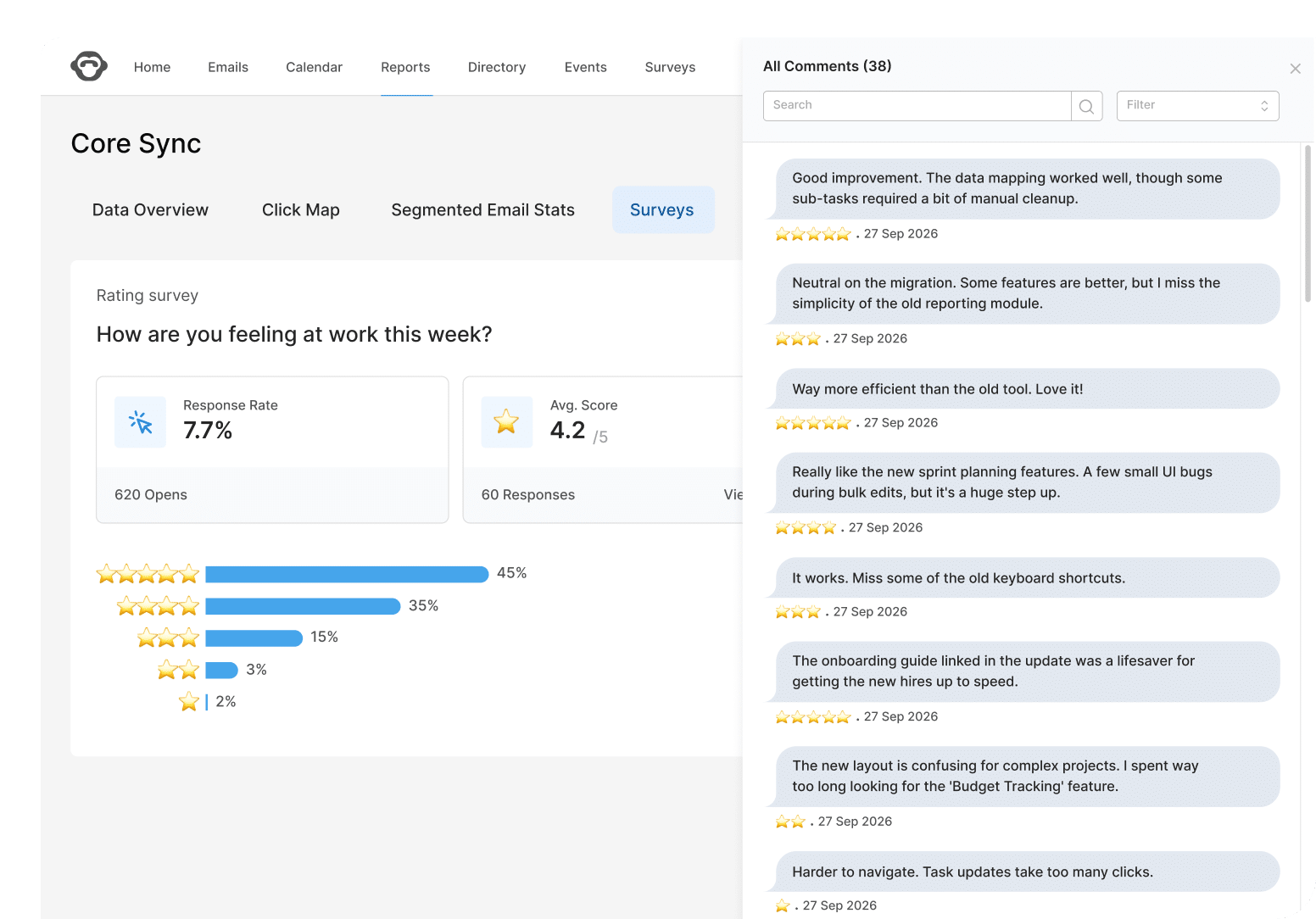
Internal communications play a critical role in supporting engagement surveys and feedback loops through internal emails. Asking for feedback, and more importantly, acting on it, shows employees that their voices shape the future of the organization.
Try this internal survey email template:
Subject: Got a few minutes? We’d love to hear from you, [Name]
Hi [Name],
It’s important to us that our organization reflects the perspectives of our team members, which is why we’d like your feedback on how we can improve. To capture as many voices as possible, we’ve created a couple of survey options:
- Give us your quick take in 2-3 minutes: Answer our 5 top questions we’d like feedback on.
- Share your in-depth perspective with us in 7 minutes or less: Complete the full employee engagement survey to provide a fuller picture of your experience.
Your input helps us understand what’s going well and what needs attention. Stay tuned for a follow-up email with our key takeaways from the data on [Date].

Celebrating milestones and anniversaries
Milestone moments are powerful opportunities to build long-term loyalty and acknowledge one’s dedication and time.
Here’s a “choose your celebration” style milestone email template to try:
Subject: Celebrate your way today, [Name!]
Hi [Name],
Happy [milestone/anniversary]! However you like to celebrate, whether that’s a time block for a walk outside, a treat from your favorite café, or signing off early for the day, we encourage you to take a little time for yourself today and celebrate all that you’ve accomplished here so far.
We’re grateful for your time, hard work, ideas, and the energy you bring to our team. Thanks for being here!
PRO TIP: Encourage managers to follow up after these emails and share positive feedback and appreciation from team members to extend the celebration.
How to Optimize Employee Journey Emails
Designing effective internal email campaigns is about what you say, who you say it to, and how relevant it feels to them in that moment. The following levers help you deliver more thoughtful, human-centered communication across every stage of the journey.
Segmentation by stage
When teams are busy, it can feel easier to blast messages to everyone and hope your readers can extract the pieces that are valuable and relevant to them. Instead, segmenting by employee journey stage and tailoring communications to that stage increases relevance. And when an internal email feels relevant, you can increase employee email engagement without unnecessarily overwhelming inboxes.
Here’s an example of how to segment by stage and what to cover:
- New hires (Weeks 1-4): First-day logistics, culture introductions, benefits registration deadlines, training reminders, and manager introductions
- Post-onboarding new hires (60-90 days): Check-ins, early career development nudges, and feedback to address gaps and improve onboarding
- Early stage employees (Years 1-4): Milestone recognition, growth and development opportunities, career path clarity, retention emails, company-sponsored group and volunteer opportunities, and feedback
- Tenured employees (Years 4+): Milestone recognition, promotion opportunities, advanced leadership or certification programs, retention emails, company-sponsored group and volunteer opportunities, and feedback

Personalization tactics
Show employees that your organization values them through email personalization techniques. You don’t necessarily have to write emails to each individual manually. When people receive internal email communications with their name that reflect their role, goals, or where they are in their journey with your organization, messages feel more relevant, human, and helpful.
Try these personalisation tactics (often easier to do with an internal communications email platform):
- Thoughtfully use names, roles, locations, and team references – Personal details quickly let employees know a communication is relevant to them, piquing interest and encouraging engagement. Tools that offer personalization through merge tags make it easy to craft custom messages.
- Work with other teams to curate tailored resources for different groups – While internal communicators can’t always do this one alone, sending handpicked training sessions and internal resources by job function or skill level goes a long way. Instead of asking employees to browse through lengthy lists of opportunities and determine what’s relevant, curation turns learning and development internal emails into something immediately actionable.
- Tie opportunities to stage, interests, or past actions – Newer employees need foundational training, while tenured employees may be looking for more advanced sessions. Newer employees may not be looking for internal promotions, but tenured employees could be. Provide employees with appropriate information at various stages.
Timing/frequency best practices
Like all internal emails, timing matters when mapping employee journey communications. When messages arrive too early, too late, or too often, employee journey internal emails can create unwanted noise and decrease trust in the organization’s overall internal communications strategy.
Keep the following timing and frequency principles in mind (and adjust them accordingly for your team):
- Align internal emails with tangible moments – Messages tied to real-time moments are more likely to resonate and land naturally. For example, sending a personalized welcome email on an employee’s first day versus a general welcome email to all new employees once every two weeks creates an experience tied to a specific moment.
- Avoid stacking separate communications – Sending multiple emails in a condensed period, especially from different departments, can create overwhelm and confusion. When internal communicators aren’t the only ones sending internal emails, creating a shared calendar across HR, IC, IT, and other relevant groups can help prevent this.
- Use analytics to understand what works for your team – There isn’t a perfect, one-size-fits-all timing manual for sending internal emails. That’s why it’s essential to review your internal email benchmarks, open rates, clickthrough rates, read times, trends, and campaign performance to understand what time works best for your people.
Tools for Journey Mapping and Measurement
The right internal email communication tools make mapping and measuring employee journey emails a lot easier.
ContactMonkey for segmentation + personalization
Internal communications email software like ContactMonkey is perfect for mapping internal emails to employee journeys due to a helpful suite of features, including:
- Audience segmentation: Create highly relevant employee journey emails with custom segments and list management, plus audience segmentation analytics that help you see which departments, teams, or regions are engaging with your messages to identify gaps.
- Personalization: Tailor subject lines, images, dynamic content blocks, merge tags, and timezone-specific sending to ensure your internal communications reach the right audience with the right information at the right time.
Analytics dashboards for tracking journey impact
ContactMonkey helps internal communicators prove value and drive action with real-time visibility into internal email analytics, including open rates, clickthrough rates, location, device type, read time, and more. Plus, benchmark internal email performance for continuous improvement and build leadership-ready reports in minutes. Analytics dashboards like ContactMonkey’s make it easy to compare engagement across different journey stages, demonstrating the impact of communication on retention and development.

Elevating the Employee Experience Through Internal Emails
Mapping internal emails to the employee journey ensures that people get the right support exactly when they need it, building confidence, trust, and long-term connection. ContactMonkey’s email solution help internal communicators reach employees throughout every stage of the employee lifecycle and equips them with the data and analytics they need to elevate the employee experience.
Map every internal email to the moments that matter most in the employee journey from day one to day done. Book a demo to see how ContactMonkey helps you plan, send, and measure the right message at the right moment, without changing how you work.