Internal communication is undergoing one of its most significant shifts in decades. Internal communication teams are contending with rapid technological change, distributed workforces, and growing expectations from both employees and executives. External volatility is additionally pressuring organizations to communicate quickly and clearly.
In this environment, internal communication leaders can no longer rely on ad hoc updates or legacy, top‑down approaches. Meeting these demands requires a strategic, audience-centric, data-driven playbook. This guide covers the fundamentals of internal communication, why the function is evolving, core elements of an internal communication strategy, tool suggestions, best practices, and templates for getting started.
What is Internal Communication? (And Why It’s Evolving in 2026)
Internal communication, also known as internal comms, refers to the systems, channels, and practices organizations use to share and exchange information, ideas, and feedback. At its core, internal communication is a strategic function and a pivotal capability that companies need to enable execution, connection, alignment, culture, and trust.
Traditional vs. modern internal communication
Traditional internal communication in the early to mid-20th century was top-down with little opportunity for dialogue or feedback. Organizations pushed messaging through memos and one-way directives.
As organizations grew in size and complexity, technological advancements simultaneously disrupted the workforce, highlighting the need for a shift. The concept of “employee engagement” emerged in the 1990s, further transforming the discipline as internal communication became a critical contributor to the employee experience.
Unlike traditional internal communication, modern internal communication is far more audience-centric, two-way, technology-powered, and interactive than it was in its memo-blasting days. Internal communication evolved from an information-sharing function to a strategic, data-driven, and intentional practice.
The strategic role of IC in employee experience and engagement
The words “employee engagement” and “employee experience” often elicit strong opinions among internal communicators about whether those elements are their responsibilities.
No matter which side of the debate you fall on, the data tells a powerful story: According to Gallagher’s 2025 Employee Communications Report, 93% of communicators reported being responsible for employee engagement. According to Ragan, internal communicators are uniquely positioned to help employees feel connected by providing easier access to necessary information, anticipating employees’ needs, actively listening, and equipping managers with tools to frame messages clearly for their teams — all of which contribute to employee engagement.
While internal communication is a key driver, it’s most effective as part of a holistic employee engagement approach that includes strong executive leadership, positive company culture, and clear business goals.
Types of internal communications
Below are some common types of internal communications and their purposes:
- Strategic communications encompass messaging about organizational goals, vision, mission, business direction, and priorities. Communicators develop these messages to help employees understand where and how to contribute to add value.
- Employee experience and engagement communications include team-building activities and events, leadership listening exercises, and feedback via surveys or other mechanisms.
- Change communications broadly cover all changes within an organization, including mergers and acquisitions, restructuring, technology rollouts, and new business directions. This type of internal communication is necessary for ensuring employees understand the impact of change on their roles.
- Crisis communications convey critical information during emergencies, including natural disasters, workplace accidents, and other sensitive situations.
Importance of Internal Communication in All Organizations
Internal communication is a vital function in every organization, regardless of size or industry. Done well, it becomes the connective tissue that links strategy, people, and day-to-day execution.
Strong internal communication provides clarity. When employees understand the organization’s vision, priorities, and expectations, they can make better decisions and contribute more effectively. Internal communication also builds connection and culture by helping employees see how their work fits into the bigger picture, reinforcing values, and creating a shared sense of purpose.
From a business perspective, effective internal communication offers clear advantages: improved employee engagement and morale, smoother adoption of change, fewer errors and rework, and greater trust in leadership. It can reduce information silos, align cross-functional teams, and support retention by helping people feel informed and included. The major disadvantage arises when IC is poor or inconsistent, leading to confusion, rumors, misalignment, and disengagement. Overcommunication without a strategy can also cause information overload and message fatigue.
Ultimately, effective internal communication is not just about sending messages; it is about enabling people to do their best work together in the service of shared goals.
Common Internal Communication Challenges and Barriers
Information overload, inconsistent messaging across teams, and a lack of clarity are ongoing challenges across the internal communications landscape. Beyond the surface, internal communicators face a wide range of challenges and barriers in their work.
Sean Devlin for Ragan said, “…internal communicators are being asked to do more, but the systems and processes they have to deal with haven’t necessarily kept pace with these demands.” Additionally, internal communicators face challenges beyond their control, including the constant pace of change, difficulty measuring success, and budget constraints.
ContactMonkey’s Global State of Internal Communications Report 2026 paints a similar picture. The GSIC 2026 data revealed:
- A disconnect between demand and resources: Internal communications teams are small. Almost one in five operate as a single-person team, and nearly 10% of organizations reported having no dedicated team at all.
- External uncertainty is translating into internal consequences: 40% of respondents cited a drop in employee morale because of market factors such as policy changes, inflation, and layoffs. Internal communicators are working against factors outside their control.
- Strategic goals reflect modern-day complexities: Employee engagement (42%), leadership communication (40%), and change management (30%) are the top three focus areas for internal communicators.
Start with an Internal Communication Audit
Effective internal communication strategies begin with an internal communication audit. An internal communication audit is a comprehensive assessment of your organization’s current internal communications practices. Understanding how employees perceive, engage with, and interpret internal communications is crucial for determining how best to improve (without making a shot in the dark).
An internal communication audit must be comprehensive to provide the best possible data-rich insights. Conducting an audit requires time and resources, so internal communications teams need to plan effectively.
If you aren’t sure what information would be helpful as you begin your review, consider what data you already have (or can get access to) as a baseline. This includes real-time analytics from communications platforms, pulse and employee engagement survey results, direct feedback from employees and managers, and even exit survey data. Conduct new surveys to gather fresh feedback when relevant.
In addition to existing quantitative data, incorporating qualitative data collection is critical for identifying gaps, as the data alone can’t tell the full story. That looks like:
- Meeting with senior management to understand their perception of internal communications and what they want to achieve
- Gathering employee perspectives through focus groups, visiting frontline workers on shift, and engaging in casual conversations
The outcome of an internal communication audit should provide the building blocks for your internal communication strategy, including both short- and long-term actions you can take.
Core Elements of an Effective Internal Communication Strategy
Modern internal communication strategies include flexible systems and approaches to increase employee clarity, reduce noise, and align teams. While internal communication strategies vary across organizations and their unique needs, the core elements remain the same:
Setting objectives and aligning with business goals
Strong internal communication starts with clear, measurable objectives that ladder up to the organization’s strategy. Rather than focusing on activity (how many emails you send), focus on what you’re trying to change or enable. When setting objectives, ask these questions:
- What are our organization’s strategic goals for the year? (e.g., margin improvement, better customer experience, digital transformation)
- What outcome(s) do we want to achieve? (e.g, increased awareness, mindset shift, tool adoption)
- How can we tie the goals of this internal communication to specific measurements, such as awareness levels, understanding, participation rates, or engagement trends?
- What stakeholders do we need to partner with to reflect shared priorities? (e.g., HR, IT, operations, business leaders)
Choosing the right communication channels (email, SMS, Slack, intranet)
Effective strategies define which internal communication channels to use for different purposes and reach employees where they are. Internal communicators must understand where different employee groups spend their time, how to use channels to reflect urgency, when to lean into depth versus brevity, and when manager cascading is helpful. The goal is not to use every available channel, but to design a coherent system in which employees know where to look for what and how each channel works.
Consider:
- Email for broad announcements, newsletters, and campaigns
- Mobile and SMS for workers without regular access to email or a computer
- Collaboration tools (Slack/Teams) for quick updates
- Intranet or employee experience apps for a consolidated hub and single source of truth for policies, resources, and evergreen information
Building a flexible internal communication framework
Modern internal communication must be structured yet adaptable. Change is constant, and communicators support multiple initiatives at once, some of which evolve during the work. A flexible framework that provides guardrails without rigidity includes:
- Governance and roles indicating clear ownership for planning, approvals, and execution
- Principles guiding what content belongs in which channels
- Standardized templates and reusable formats to save time and improve consistency
- Audience segments with clarity around how to use them for campaigns
- Built-in feedback and listening loops to support two-way communication
Top IC strategies and tactics to implement in 2026
As organizations face ongoing transformation, hybrid work realities, and increased pressure to do more with fewer resources, internal communicators must answer: What value does this work create for our organization?
The following five areas of focus are where high-performing internal communicators can focus their efforts and demonstrate real business impact.
1. Shift from channel metrics to outcome-based narratives
In 2026, internal communicators need to move away from reporting the number of messages they send. Connecting communication activities to outcomes, such as increased participation, faster change adoption, and reduced confusion are where business value stories are told. Framing success around trends and impact rather than one-off isolated metrics will deliver clearer stories about how internal communications supports business goals.
2. Make relevance a core editorial principle
One-size-fits-all messaging is out; tailored, audience-specific messaging is in. Relevance is a baseline expectation in a noisy world. Internal communicators who focus on audience-specific needs, prioritize messages logically, and use plain language will earn trust, protect attention, and ensure critical messages land when it matters most, at the best time for employees.
3. Use internal comms channels as change infrastructure
Change is no longer episodic, with an occasional enterprise-wide project popping up here and there. Especially in organizations without embedded change management professionals or access to external consultants, internal communications in 2026 can and should support change infrastructure. Designing channels, such as email newsletters, as a repeatable system to reinforce priorities and share change-related information meaningfully can make change feel more manageable for employees when things feel unstable.
4. Build leader communication capabilities > polished messaging
While internal communicators once served as reactive partners known for drafting messages and getting them “just right,” today’s employees watch leaders more closely and seek ongoing, authentic communication. Internal communicators must focus on enabling leaders with data-informed guidance, customizable talking points, and coaching on tone and timing through an unpolished lens.
5. Use data to say “no” and protect employee focus
Internal communicators play a unique role in helping the organization’s employees focus on the most important work. Performance data, two-way communication (listening, formally and informally), and behavioral observation give communicators the evidence they need to challenge low-value content and reset stakeholder expectations. The same holds true when leaders present unclear new messaging that is unclear —internal communicators can push back and ask questions to ensure employees have the clarity they need before rolling out a half-baked initiative.
Top Internal Communication Tools and Platforms in 2026
With many modern internal communications platforms, including intranets, employee experience applications, email tools, and more available, knowing how to choose the right tools for your organization is a strategic differentiator.
What to look for in modern IC software
When searching for the right internal communication platform for your team, keep the following top of mind:
- Usability for internal communicators; accessibility for employees: Internal communication software needs to be user-friendly for everyone involved to eliminate friction and ensure high adoption rates.
- Enterprise-grade security: Protecting internal data is non-negotiable.
- Analytics and dashboard reporting: Robust tracking of real-time internal communication metrics is necessary for showcasing performance and boosting business value.
- Integration with your tech stack: Seamless integration with existing tools, such as Gmail, Outlook, and your HRIS, is critical to preventing disjointed workflows.
- Customization and automation options: Advanced capabilities for audience segmentation (by department, location, or role) and scheduling features improve internal communication workflows while enabling communicators to deliver tailored messaging to different employee groups.
Benefits of using an all-in-one platform like ContactMonkey
Managing internal communications across disconnected tools creates friction for communicators and employees alike. An all-in-one internal email platform like ContactMonkey centralizes the creation, distribution, engagement, and measurement of messages in one place, making it easier to deliver consistent, high-impact messages at scale.
Instead of juggling email tools, survey platforms, analytics dashboards, and integrations, internal communicators can streamline workflows and focus on strategy. This is especially valuable as teams remain lean and leadership expectations around measurement and ROI continue to rise. With built-in analytics, audience targeting, and feedback tools, all-in-one platforms help communicators clearly demonstrate the impact of their work while improving the employee experience.
Just as importantly, consolidating tools reduces message fatigue for employees. Communications feel more intentional, more relevant, and easier to engage with, whether employees are remote, hybrid, or deskless.
Check out the section below on must-have features for internal communications software for more information.
Unlock Internal Comms Superpowers
Discover why 10,000+ rely on us. See the internal email and employee newsletter platform in action.
Book demo

Must-have features for internal communications software
When evaluating internal communication tools for 2026, these core features separate basic sending tools from platforms built for strategic impact:
Enterprise-grade security
Internal messages often include sensitive company information. Modern IC platforms must offer enterprise-level security, compliance, and access controls to protect employee data and maintain trust.
Audience segmentation and personalization
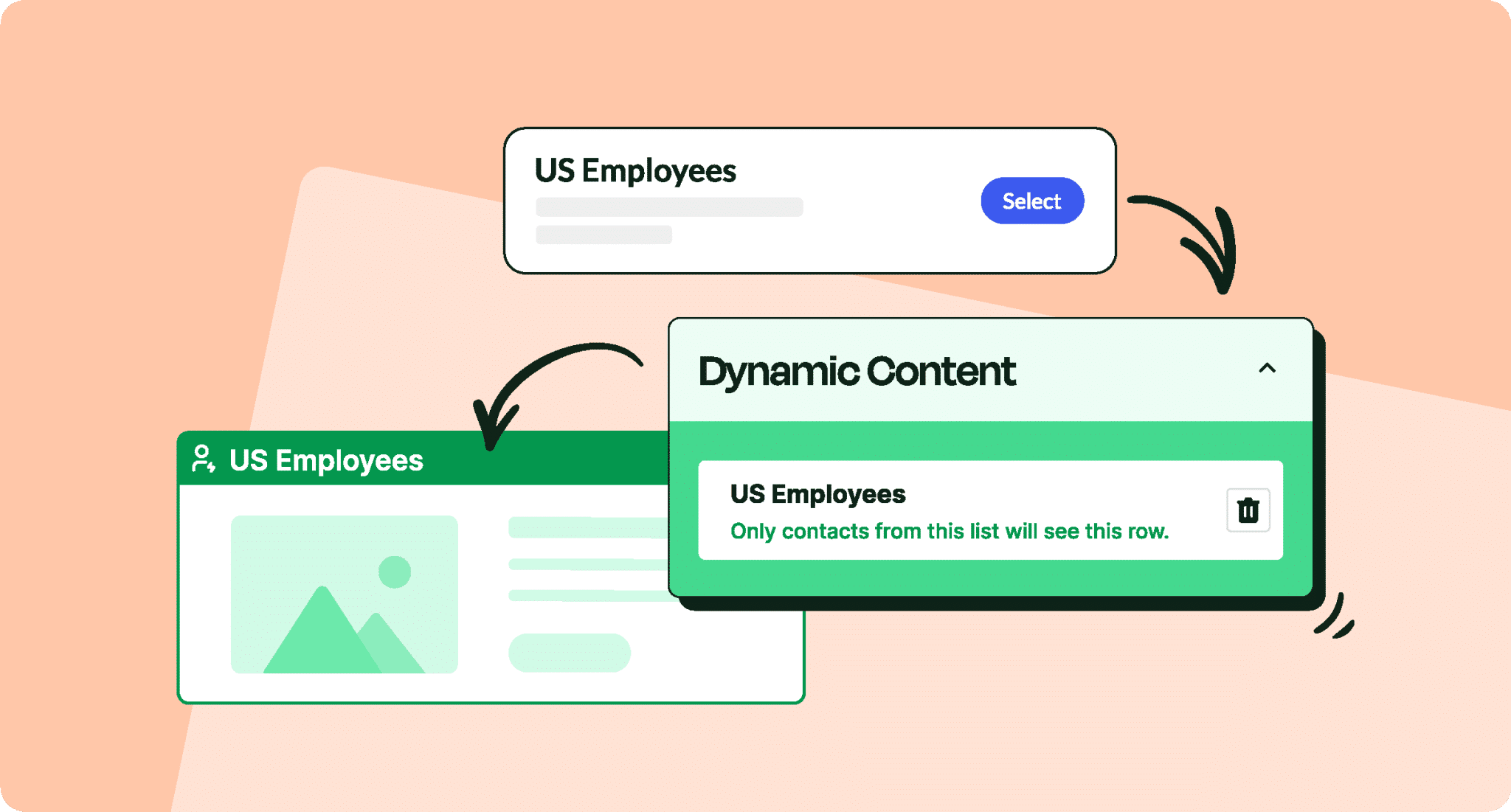
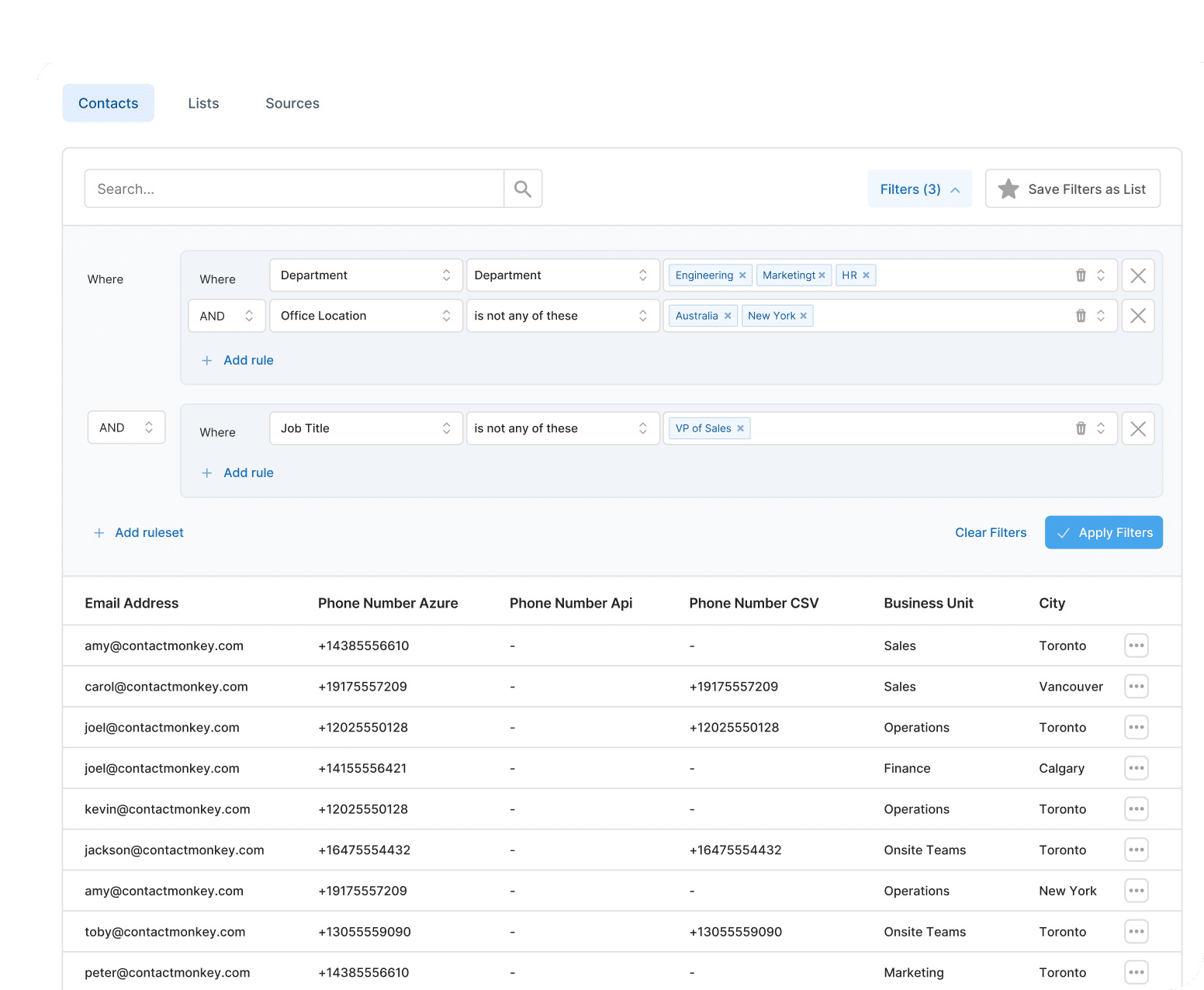
One-size-fits-all messaging no longer works. The ability to segment audiences by department, role, location, or employee type ensures messages are relevant and timely. Personalization drives higher engagement and reduces noise across internal channels.
Templates and brand consistency
Pre-built, customizable templates save time and ensure every message aligns with brand standards. Templates also help smaller IC teams move faster without sacrificing quality or accessibility.
Surveys and feedback tools
Two-way communication is essential for engagement. Built-in pulse surveys, polls, and eNPS tools make it easy to gather real-time employee feedback and act on insights without relying on separate platforms.
Scheduling and automation
Scheduling tools allow communicators to plan campaigns in advance, maintain consistent cadences, and reach employees at the right time across time zones. Automation reduces manual effort and supports long-term planning.
Analytics and reporting
With measurement consistently cited as one of the biggest challenges for internal communicators, robust analytics are non-negotiable. Real-time dashboards that show opens, clicks, read time, and engagement trends help teams optimize content and demonstrate business value.
Integrations with existing tools
Internal communication platforms should fit seamlessly into your existing tech stack. Integrations with Outlook, Gmail, HRIS systems, and collaboration tools like Microsoft Teams prevent silos and keep workflows connected.
Measuring Internal Communication Success: KPIs and Analytics
ContactMonkey’s Global State of Internal Communications (GSIC) Report 2026 revealed that today’s internal communicators feel a growing pressure to move beyond activity-based reporting toward outcome-driven measurement. Measuring success is top of mind, but still a work in progress. Here’s where to start:
Key metrics to track in 2026 (open rates, read time, engagement rates)
Modern internal communications require a combination of reach and impact metrics. Internal communicators need to understand whether they’re reaching employees and if their messaging is influencing behavior through:
- Open rates: the percentage of employees who open an internal email, signaling whether subject lines, timing, sender credibility, and channel reach are effective
- Read time: how long employees spend reading content, distinguishing between quick opens and consumption
- Engagement rates: how employees interact with an email, highlighting whether the internal communication drove comprehension, action, and engagement

Real-world benchmarks and KPIs
Benchmarking can help you interpret your data, but use it as a guide. Every organization’s context, culture, and channel mix is different. The most meaningful benchmarks come from your organization’s own historical trends and peer comparisons within similar industries and organization sizes.
Use a combination of internal historical benchmarks for campaign or messaging comparisons, segment-based benchmarks to compare audiences, and external references, such as ContactMonkey’s Internal Email Benchmark Report, to gauge how your internal communication KPIs compare against your industry and similar groups.
Internal Communication Best Practices for 2026
In 2026, internal communication will be defined as much by how organizations listen to, include, and prioritize employees as by what they say. The following best practices have the potential to transform the internal communication function:
Two-way communication and feedback loops
Two-way communication and intentional feedback loops are now essential for building trust, improving relevance, and driving better outcomes. Bring two-way communication to life by:
- Designing major internal communication initiatives with listening in mind: Internal communication plans should include not just what you will share, but where and how your team will collect and respond to questions, feedback, and suggestions.
- Embedding simple, ongoing feedback loops: Quick polls, rating scales, and one-question “Was this helpful?” surveys capture continuous feedback.
- Hosting live and asynchronous Q&As: Keep conversations open and flowing with ask-me-anything (AMA) sessions and digital Q&A tools.
- Closing the loop visibly: Most importantly, acknowledge all feedback, even if it doesn’t spark change. Share back what you heard and what will and won’t change.
Embedding leadership communication for trust and transparency
In an environment plagued by constant change and uncertainty, employees look to leaders for clarity, transparency, and direction. Embedding leadership communication to build and rebuild trust looks like:
- Prioritizing clarity and candor: Transparent communication involves speaking plainly about what’s happening and why it matters. Even across tough topics, openness builds long-term trust.
- Humanizing leadership voices: Employees want to see leaders as people just like them. Use a mix of videos, written reflections, and live sessions to offer unpolished conversations.
- Equipping people managers: Manager toolkits with key messages, FAQs, slides, and discussion guides are essential for maintaining trust between managers and their team members.
Inclusive, accessible communication for remote and hybrid teams
Internal communication design needs to meet the standard reality of hybrid and remote work environments. Inclusive and accessible communication looks like:
- Designing campaigns for multiple contexts: One message may need to reach desk-based workers and frontline employees worldwide. Adjusting verbiage, language, and format is critical.
- Respecting time zones and schedules: Sending communications based on location and timing, offering multiple live sessions, and providing recordings and summaries is inclusive.
- Offering language and localization support: Providing translations and localized versions of key messages, and encouraging local leaders to contextualize them for regions and cultures, makes information more accessible.
How to Create Effective and Creative Internal Communication Campaigns
The most successful and impactful internal communications are rarely the result of a clever subject line or a last-minute draft written on a whim. Clear goals, well-defined audiences, aligned priorities, and disciplined planning that leaves room for creativity are necessary ingredients for effective internal communications.
Planning different types of comms and key topics
Strong internal communications campaigns start with three questions:
- What are we trying to achieve? What specific behavior, mindset, or outcome are we trying to influence and why?
- Who needs to receive this message? Which groups need to know, feel, or do something differently?
- How will we know our communications were successful? What metrics will indicate success? What do we need to observe?
Answering these questions is crucial not only for the success of the message itself but also to ensure alignment with business goals and key topics. Key messages in internal communication should align with the company’s strategy, priorities, and values. Internal communicators also play a powerful role in identifying and raising any overlaps or conflicts with other initiatives that could lead to mixed messaging and confusion.
Using content calendars
Campaigns can become noisy and disjointed without the proper structure. Internal communication content calendars are essential for coordinating timing, maintaining consistency in core messaging, and reducing information overload, preventing clashing announcements from becoming burdensome.
Use content calendars to outline:
- Key dates and milestones (initial message, reminders, follow-ups, wrap-ups)
- Channels for touchpoints (email, intranet, Slack/Teams, SMS)
- Role responsibilities (content creation, approval, and distribution)
Content creation (topics and formats)
Understanding the goals, audiences, and success criteria of your internal communication campaign informs the best content creation formats. Considering message depth, natural format mixes (e.g., pairing an email announcement with manager talking points for a team meeting post-announcement), and channel priority ensure the formats you choose are effective for your audience and objectives, not just where it’s easiest to push the message.
Audience segmentation and personalization
When battling resource and budget constraints, teams may unintentionally design internal communication practices around what’s easiest for them rather than what’s most effective for employees. However, tailoring content by role, function, location, language, and work environment is far more effective than a one-size-fits-all blast. Fewer blanket messages and more targeted, relevant communications help capture attention, reduce noise, and improve comprehension and action.

How to Measure and Improve Internal Communication Campaigns
Sending internal messages is easy. Proving they worked (and knowing how to make the next one better) is where most teams struggle.
In fact, tracking and measuring internal communications remains the top challenge for communicators. To move internal communications from a support function to a strategic one, teams need a clear measurement framework paired with tools that turn data into action.
Start with the right internal communication metrics
Effective measurement starts by tracking metrics that reflect employee attention, understanding, and action, not just message volume.
Key internal communication metrics include:
- Open rate: Indicates reach and subject-line effectiveness
- Click rate: Shows whether employees are engaging with content and calls to action
- Click-to-open rate (CTOR): Measures content relevance among employees who opened the message
- Read time: Reveals whether employees skim, scan, or actually read communications
- Device breakdown: Helps optimize for desktop vs. mobile employees
- Survey and poll responses: Captures sentiment and understanding in real time
ContactMonkey automatically tracks all of these metrics in a single analytics dashboard, eliminating manual reporting and giving communicators instant visibility into campaign performance.
Align metrics with internal communication KPIs
Metrics only matter when they’re tied to outcomes leadership cares about. Strong internal communication KPIs typically ladder up to goals like engagement, alignment, adoption, and retention.
Common IC KPIs include:
- Increased employee engagement scores
- Higher participation in surveys, events, or initiatives
- Improved leadership message visibility
- Faster adoption of tools, policies, or change initiatives
- Reduced communication fatigue through targeted messaging
With ContactMonkey, teams can map campaign analytics directly to these KPIs. Instead of reporting on isolated email stats, communicators can show trends over time and connect communication efforts to employee behavior.
Get powerful email analytics and reporting features
Know exactly who is opening and engaging with your employee communications and company newsletters.
Explore analytics & reporting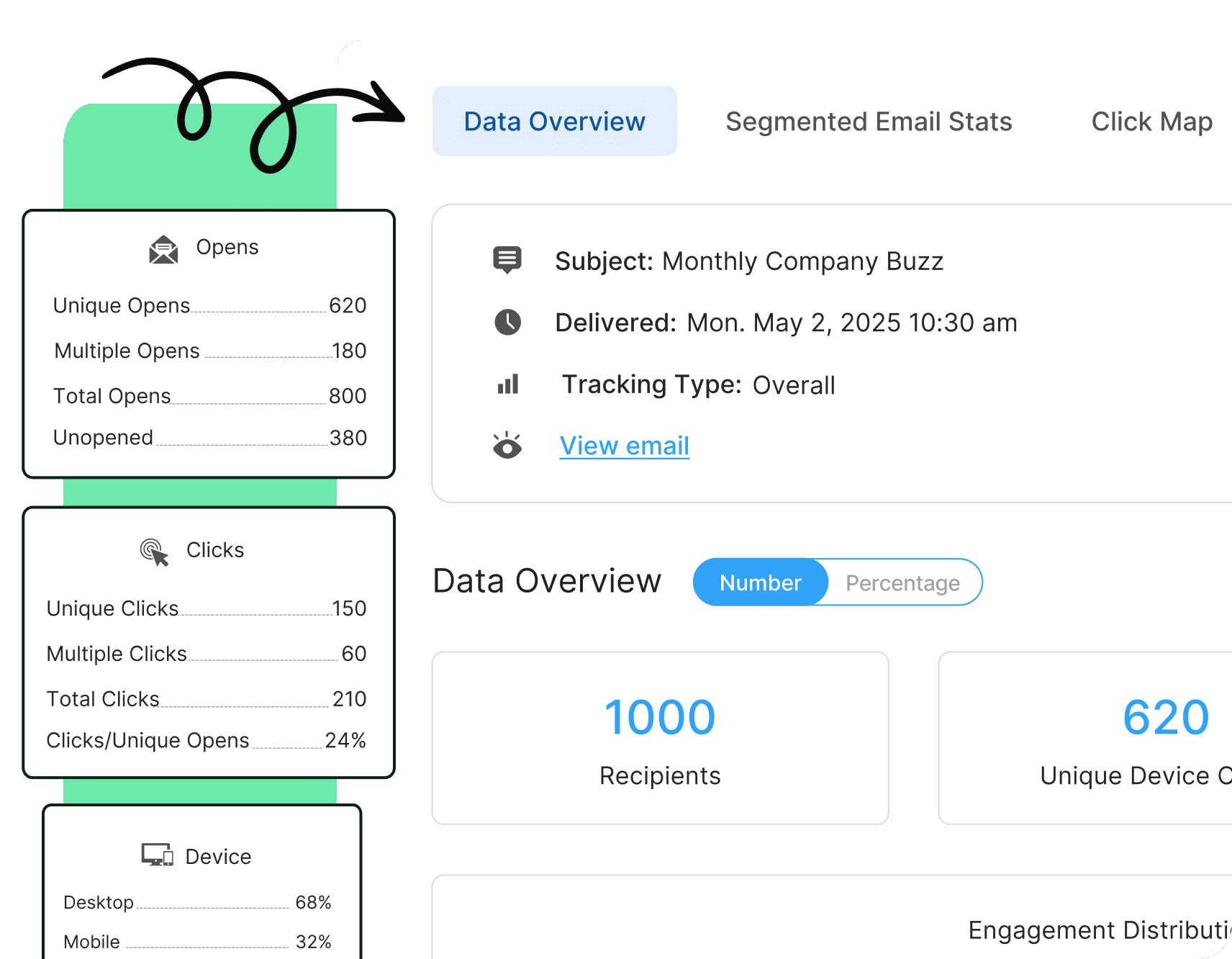

Examples of Internal Communication That Works
Below are some examples of how to strengthen your organization’s internal communication practices and why they work:
Change management campaign with leadership voices
When building effective change management campaigns through an internal communications lens, Prosci, a global leader in change management solutions, emphasizes the importance of answering the “what” and the “why.” Employees want to know what’s changing and why it matters to them.
Take the case of announcing an acquisition. In running a change management campaign, besides addressing the “what” and the “why,” internal communications should focus on:
- Acknowledging the discomfort change can bring (and creating space for excitement around new opportunities)
- Specifying what the organization knows about the change, as well as what they don’t know, and when more information will become available
- Who to contact with questions about the change
Another important element to consider: equipping managers with information about the change before sharing the news with the organization so they can answer questions, follow up with their teams, and reiterate messaging consistently.
Employee newsletter built from analytics insights
Too many organizations create and send an employee newsletter without assessing whether the format and content work. With a tool like ContactMonkey, you can create an employee newsletter people actually want to read and engage with using analytics insights.
Below are some changes you could make based on what the data says:
- If a heatmap reveals employees aren’t reaching the end of the newsletter content, your team could run an experiment to shorten the copy and assess heatmap changes
- If you want to refresh your content or learn more about employees’ interests, you could add new links to content available in other channels (intranets, employee social media posts, etc.), and then review click-through and engagement rates to see what resonates
- You could use A/B subject line testing to improve your newsletter open rates
Survey campaign to improve engagement scores
Pushing surveys and asking for feedback without a plan to address the feedback (whether or not your organization acts on it) can do more harm than good. If you want to run a survey campaign that improves engagement scores, consider:
- Building the acknowledgement of survey feedback into your internal communication plan and communicating to employees when to expect follow-up
- Ex: Survey runs from 2/1 to 2/20; we will share feedback from the survey at the 3/4 all-hands meeting and in the 3/9 newsletter
- Addressing what changes the organization will make based on the feedback (and by when)
- Incorporating pulse surveys after implementing changes to understand what’s resonating and what isn’t
Top Internal Communication Trends for 2026
These are the top internal communication trends for 2026 from ContactMonkey’s GSIC 2026 Report:
- Internal communicators are leading across mission-critical topics: Artificial intelligence in the workplace (57%) and employee experience (48%) are the top focus areas for internal communicators in 2026, followed by change management (43%).
- Proof of value pressure is high: 40% of respondents are interested in measurement and analytics (40%), and 24% explicitly cited proving the ROI of internal communication.
- Teams are looking to do more with less: 31% of respondents expressed interest in automation and efficiency.
- Engagement challenges persist: Employee recognition (29%), collecting and acting on employee feedback (27%), and engaging deskless or frontline employees (24%) remain high priorities.
Internal Communication Case Studies
Below are real-world examples from leading organizations that have transformed the way they communicate internally with their teams. These case studies show how intentional, tech-enabled internal comms can boost engagement, build trust, and drive measurable business impact.
Flagger Force Boosted Open Rates by 40%
Flagger Force, a company that provides safe, professional traffic control services across the Mid-Atlantic region in the US, chose ContactMonkey for accurate, reliable email analytics, deep Outlook integration, real-time email collaboration, and flexible templates. Since switching to ContactMonkey, the Flagger Force team has already seen a 40%+ increase in email open rates, signaling improved email deliverability and stronger employee engagement.
SEEK Outperforms Benchmarks with ~60% Open Rates
SEEK, a leading global employment marketplace headquartered in Australia, had a vision for more dynamic, brand-aligned communications. Since adopting ContactMonkey, SEEK has seen higher engagement among the ANZ audience, with open rates reaching around 60% and average click rates around 19%, well above industry benchmarks.
Free Internal Communication Templates & Resources
Looking for internal communication templates and resources to support your communication strategy? ContactMonkey can help:
Email templates
- Free 20+ Best Internal Communication Email Templates
- CEO Weekly Update Template
- Upcoming Events Email Templates
- Employee Welcome Email Templates
Survey templates
Audit checklists and planning guides
Ready to Turn Internal Communication into Measurable Impact?
Choosing the right internal communication tools is only half the equation. The real differentiator is how well you can reach employees, measure engagement, and continuously improve your campaigns.
As internal communications teams are asked to do more with less, having one platform that combines targeted messaging, built-in analytics, employee feedback tools, and seamless integrations makes all the difference. When you can clearly show what’s working (and why), you’re no longer guessing. You’re leading with data.
ContactMonkey helps internal communicators design better emails, track real employee engagement, and prove the value of their work with real-time analytics, all from directly within Outlook or Gmail.
See how ContactMonkey can help you simplify internal communications and drive measurable engagement. Book a demo today to learn more!
FAQs
1. What makes internal communication effective in 2026?
Effective internal communication in 2026 is clear, relevant, and two-way. Messages are easy to understand and act on, tailored to different employee groups, and supported by feedback loops that allow employees to ask questions and share input. Effective internal communication continuously evolves based on analytics and employee feedback, rather than relying on one-way broadcasts.
2. How do you measure the success of internal communication?
Success is measured using a mix of reach, engagement, and outcome metrics. Core indicators include open rates, read time, click-through and engagement rates, survey participation, and event attendance. These are combined with outcome metrics such as adoption of new tools or processes, completion of required actions, and improvements in communication-related engagement scores.
3. How does internal communication support change management?
Internal communication supports change management by providing consistent, transparent messaging that explains what is changing, why it matters, and how it affects employees. It helps reduce uncertainty and resistance by giving people clear timelines, expectations, and resources, and by offering channels to ask questions and share concerns.
4. How can internal communication improve employee engagement and experience?
Strong internal communication improves employee engagement and experience by helping people feel informed, aligned, and heard. Clear, honest updates help employees understand the company’s direction and how their work contributes to it. Personalized, relevant content that reflects different roles, locations, and work contexts strengthens inclusion, reinforces purpose, and supports a more positive day-to-day work experience.
5. How often should organizations audit their internal communication?
Organizations should continuously review internal communication performance and conduct formal audits at least once a year. Annual audits help teams assess channel effectiveness, content relevance, and alignment with business goals, while identifying gaps and sources of information overload. Combining structured reviews with ongoing analytics and feedback enables continuous improvement.