

Most internal communications teams come to Staffbase through a logical path. The platform has a recognizable name, a broad feature set, and enterprise credibility. But what tends to happen over time is that many email-focused teams realize they are paying for intranet and mobile app functionality they rarely use, while the email workflow they rely on every day feels less prioritized. Staffbase originally entered the market as Bananatag, focused on email, but has since shifted more attention toward intranet and employee apps. For IC teams that still rely heavily on Outlook and internal email, that difference becomes more noticeable over time.
If you are reading this, there is a good chance you have already done enough research to know that more focused alternative exists. Whether you are a team of one managing communications for thousands of employees or a growing IC function being held to a higher standard by leadership, the right platform looks meaningfully different from what Staffbase offers today.
Why Are Internal Comms Teams Looking for Staffbase Alternatives?
We speak with hundreds of internal communicators each month, and the frustrations we hear about Staffbase tend to fall into the same categories regardless of organization size. The platform was built around intranet and mobile app infrastructure, and email has become a secondary consideration.
- Staffbase tracks analytics at the device level rather than the individual level, which can inflate open rates and makes it difficult to know exactly which employees engaged with a message. Users also report that pulling reporting data is manual and time-consuming, and some teams have struggled enough with Workday integration that they reverted to CSV uploads.
- The email builder has also been a common source of frustration for users. The Rich Text Editor is no longer receiving active engineering investment, some compatibility issues are not being fixed, simultaneous editing is not supported, and teams report autosave failures that have led to lost work. Template ownership is also locked, so personnel changes often require support involvement.
- Staffbase offers email as a standalone product as well as bundled with intranet and app features, and pricing varies by company size. Teams focused primarily on internal email should confirm which package actually fits their needs before assuming a bundled plan is the only option.
What to Look for in Staffbase Alternatives
A useful starting point when evaluating alternatives is understanding what Staffbase is actually optimized for. Most customers use it for employee intranet hubs, mobile apps for frontline workforces, and branded employee newsletters. Those are legitimate use cases for large enterprises with dedicated IT support, but many internal communications teams are looking for something much more centered around the day-to-day internal email workflow.
That usually means looking for a platform that helps teams get the right message to the right audience at the right time, while giving communicators more confidence in what happens after the send. The strongest platforms are moving beyond basic sending tools and investing more heavily in message quality, audience understanding, analytics, and delivery workflows that support how employees actually consume communication today.
These are the factors that matter most when evaluating a Staffbase alternative in 2026:
1. The ability to know how employees will receive your message before you send it
Most platforms in this category show you how a message performed after it reaches employees. Very few help you understand how it will land before it does. ContactMonkey’s Audience Preview lets you preview your email through AI-generated employee personas before you send, so you can pressure-test both the formatting and the message itself. You can identify how different segments of your workforce are likely to receive the communication, catch tone or clarity issues, and make adjustments while you still can. For IC teams sending high-visibility communications to large employee audiences, having that extra review layer before a send can make a huge difference in how confidently teams hit send. Staffbase does not currently offer an equivalent feature.
2. AI built into the pre-send workflow
Beyond Audience Preview, one of the most useful applications of AI in internal communications is catching issues before an email reaches employees. Staffbase does not currently offer a native pre-send review layer, so it is worth looking closely at how other platforms handle quality control during the drafting and review process.
Features like AI checks for broken links, accessibility issues, tone inconsistencies, placeholder text, and compliance risks can help reduce manual review time and make large sends feel less risky. AI email builders are also becoming more valuable for teams managing high communication volume, especially when they can generate structured, mobile-friendly drafts from a simple prompt. For organizations sending to thousands of employees, these kinds of pre-send workflows are quickly becoming an important part of the evaluation process.


3. Outlook-native sending that keeps email inside your organization
The most important thing to clarify early in any evaluation is how a platform fits into your existing Microsoft environment and whether it offers a native Outlook integration. Staffbase emails are delivered as external messages, which means employees see an external sender tag, images require a manual download, and some messages may be filtered before they reach inboxes. For organizations running Microsoft 365, that difference matters to both IT teams and employees receiving the communication. Look for a platform that sends through your own Outlook environment so internal emails arrive the way employees expect, without requiring IT approval for an external sending server.
4. Engagement analytics that help prove the impact of internal comms
Staffbase tracks engagement at the device level rather than the individual level, which can make open rates unreliable and gives teams limited visibility into who actually read a message. When leadership asks whether a critical communication reached the right employees, it becomes difficult to answer with confidence. That level of visibility matters in internal comms because follow-up often depends on it.
So look for a platform that provides individual-level engagement analytics, including who opened, who clicked, how long they spent reading, and who did not engage at all, so teams can follow up more effectively. The ability to export that data into tools like Power BI or Tableau is also becoming increasingly important for leadership reporting. The ability to collect employee feedback directly inside email, through pulse checks, emoji reactions, and eNPS-style surveys, is also worth evaluating, since platforms that require employees to click out to a separate tool see significantly lower response rates.

5. Audience management that does not depend on manual uploads
One of the most consistent frustrations among Staffbase users is the audience management workflow. Because Staffbase cannot sync with Outlook distribution lists, teams are often left maintaining two separate sets of lists and relying on manual CSV uploads from IT to keep them updated. Most internal communicators already know how quickly lists become outdated as employees join, leave, change teams, or move into new roles, and manually keeping up with those changes adds a lot of unnecessary admin work. Look for a platform that syncs automatically with your HRIS and Active Directory, so audience lists stay current as teams, roles, and employee information change.
6. Collaboration workflows that support growing IC teams
Internal communications workflows often involve multiple people reviewing, editing, approving, or reusing content over time. Staffbase’s email builder does not support simultaneous editing, has documented autosave failures, and requires a support ticket to change template ownership when a team member leaves. For teams managing communications across shared workflows, those limitations can slow things down quickly. Look for a platform with real-time co-editing, version history, auto-save, and role-based permissions that your team can manage directly without relying on support.
7. Pricing that reflects what you actually use
Staffbase offers email as a standalone product in addition to bundled intranet and employee app packages, and costs vary depending on company size and which package fits your needs. When evaluating alternatives, look for transparent pricing that includes analytics as a standard feature rather than a paid tier, and doesn’t increase materially at renewal once you’re committed.
The 8 Best Staffbase Alternatives for Internal Communications Teams
We reviewed the main Staffbase alternatives and pulled together the top internal communications platforms that teams most often compare during the evaluation process.
Want to skip ahead? Click on any of the Staffbase alternatives below to jump directly to that section.
1. ContactMonkey – The best overall Staffbase alternative
ContactMonkey is an internal communications platform built natively into Outlook and Gmail, built for teams that need stronger email workflows, analytics, and audience targeting. Where Staffbase has shifted its strategic focus toward intranet and employee apps, ContactMonkey has spent over 15 years doing one thing: making internal email more effective. That means helping communicators craft the right message, understand how it will land with different audiences, and know with certainty who engaged once it sends. That focus shows up across every part of the platform, from how emails are sent and measured to how AI is embedded into the workflow before anything reaches an employee’s inbox. It is the platform most commonly chosen by organizations that are outgrowing Staffbase’s email capabilities or no longer want to pay for a suite of features they do not use.
Where ContactMonkey separates itself most clearly from Staffbase and every other platform in this category is in how it has built AI into the internal communications workflow. The investment is concentrated at the front of the send lifecycle, before emails reach employees, which is where mistakes are most costly and where communicators benefit most from extra review and support.

Pros
- Audience Preview lets teams see how different employee groups are likely to receive a message before it is sent.
- ConfidenceCheck scans emails for broken links, accessibility issues, placeholder text, readability problems, and custom compliance rules before every send.
- CoAuthor generates complete, mobile-ready email drafts including layout, copy, and subject line from a single prompt
- Outlook-native sending through your own Microsoft environment with no external sender tags, no image download prompts, and no external server routing
- A dedicated IP address per customer for improved deliverability and easier IT whitelisting
- Individual-level engagement analytics segmented by department, location, role, or any HRIS attribute, with Power BI and Tableau integration via the Analytics API
- Embedded email surveys including pulse checks, emoji reactions, and eNPS-style feedback that live directly inside employee emails, with no separate tool or platform required
- 80+ HRIS integrations including Workday, ADP, UKG, SAP SuccessFactors, and Azure AD with nightly automatic sync
- Named Customer Success Manager for every account with 24/5 live chat and response times typically under five minutes
- SOC 2 Type II and ISO 27001 certified with regional hosting across the US, Canada, EU, and Australia
Cons
- Purpose-built for email and works best alongside a separate intranet solution such as SharePoint or Appspace, so organizations that need a unified omnichannel suite in a single product will need to factor that in
- Platform delivers the most value when teams actively use its analytics to inform their communications strategy, which requires a degree of program maturity to fully leverage
Bottom line
ContactMonkey is the strongest Staffbase alternative for internal communications teams whose primary channel is email and whose program is being held to a higher standard. The combination of Outlook-native sending, individual-level analytics, and AI that works before the send rather than after it addresses the exact limitations that lead most teams to leave Staffbase in the first place. For organizations running on Microsoft 365 that need a platform built specifically for internal communicators rather than one where email is a secondary product, ContactMonkey is the clearest fit in this category.

2. Poppulo
When comparing Poppulo vs Staffbase, both platforms offer enterprise omnichannel suites covering email, digital signage, mobile apps, and intranet. It is typically deployed by organizations with dedicated IT resources and the budget to support a lengthy implementation process. Teams often find that day-to-day flexibility is more limited than expected once they are live, particularly when template changes require support involvement or more advanced analytics are only available on higher-tier plans.
If you are specifically evaluating Poppulo, our full breakdown of Poppulo alternatives covers how it compares across features, support, and email capabilities in more detail.
Pros
- Broad omnichannel coverage across email, digital signage, mobile, and intranet in one platform
- Strong fit for very large organizations that need multiple communication channels managed centrally
- Established enterprise presence with a large customer base
Cons
- Pricing is significantly higher than most alternatives, with additional charges for template changes, analytics upgrades, and new features
- Outlook integration is plugin-based rather than native, which creates rendering issues including images requiring a manual download to view
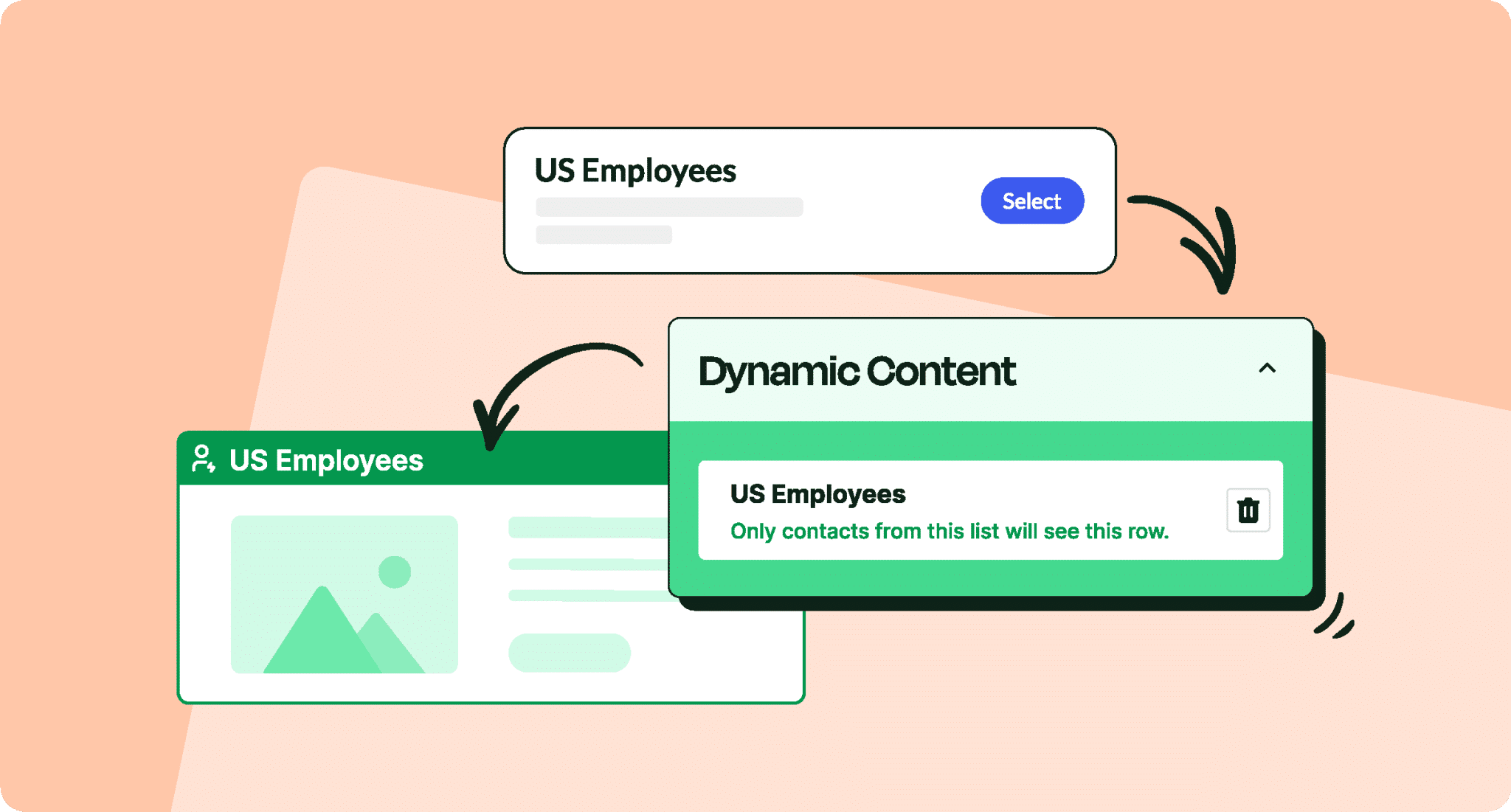
- Dynamic content is limited to one audience segment per content block, compared to up to ten with ContactMonkey
- Implementation timelines are lengthy, with some customers reporting months before going live
- Customer support is slow to respond and additional support is chargeable
Best for: Organizations evaluating Staffbase vs Poppulo that need an omnichannel platform across email, digital signage, and mobile, and where internal email is one part of a broader communications plan rather than the primary focus.
3. PoliteMail
When evaluating Staffbase vs PoliteMail, the distinction comes down to depth versus breadth. PoliteMail is an internal communications measurement platform built directly inside Outlook, designed for organizations that want email analytics without leaving their existing Microsoft environment, while Staffbase bundles email into a broader omnichannel suite.
Politemail is one of the few platforms in this category that is genuinely Outlook-native, which gives it credibility with IT teams and makes adoption relatively straightforward for organizations already running on Microsoft 365. Where PoliteMail tends to fall short is in email creation capabilities and the broader workflow features that growing IC programs increasingly require.
If you’re coming from PoliteMail, our guide to PoliteMail alternatives walks through how it stacks up against more modern internal communications platforms.
Pros
- Genuine Outlook-native integration with no external sending infrastructure
- Strong email measurement and analytics for organizations whose primary need is tracking and reporting
- Familiar Microsoft environment means low friction for IT approval and end-user adoption
Cons
- Email builder is limited compared to dedicated internal comms platforms, with fewer design and layout options
- No AI-powered pre-send capabilities such as ConfidenceCheck or Audience Preview
- Feedback and survey functionality is more limited than platforms built around two-way employee engagement
- Better suited to measurement than to the full internal communications workflow including creation, collaboration, and segmentation
Best for: Organizations weighing Staffbase vs PoliteMail whose primary need is Outlook-native email analytics and measurement, particularly where the email creation workflow already exists and tracking performance is the main gap to fill.
4. Workshop
Workshop is a web-based internal communications platform designed for simplicity, with a clean email builder and straightforward send-and-measure workflow. It is a reasonable starting point for teams with relatively simple internal email needs and limited IT involvement. As teams grow, the biggest limitations tend to be the lack of a native Outlook integration and limited HRIS integrations, which can leave internal comms teams managing employee lists manually as the organization gets larger.
If you are also evaluating Workshop, our guide to Workshop alternatives covers how it compares across Outlook integration, analytics, and HRIS integrations in more detail.
Pros
- Clean, easy to use email builder with low learning curve
- Simple setup with no IT involvement required
- Solid option for smaller teams with straightforward internal email needs
Cons
- Web-based only with no Outlook integration, so emails route through an external server rather than your own Microsoft environment
- Syncs with only six HRIS providers compared to 80-plus with ContactMonkey, which creates manual list management overhead at scale
- No native pre-send quality layer and no AI capabilities at the front of the send workflow
- Analytics are aggregate-focused rather than individual-level, which limits leadership reporting
Best for: Smaller internal communications teams with straightforward email needs that do not require Outlook-native sending, deep HRIS integration, or advanced analytics.
5. Firstup
Firstup is an enterprise internal communications platform built around personalized, multi-channel employee communications across email, mobile app, and digital signage. It was formed through a 2021 merger between SocialChorus and Dynamic Signal and is mainly positioned toward large organizations with distributed or frontline workforces.
Pros
The platform is designed for organizations managing communications across multiple channels and large employee audiences. Buyers often mention a more complex implementation process, a UI that can be difficult to navigate, and pricing that becomes harder to predict over time.
- Multi-channel delivery across email, mobile, and digital signage in one platform
- Built-in personalization features for reaching distributed or frontline workforces across multiple channels
- Well-suited for organizations where frontline or deskless worker engagement is a primary requirement
Cons
- Implementation is complex and the learning curve is steeper than most alternatives in this category
- Pricing is not publicly available and requires a custom quote, which makes early-stage evaluation harder
- UI limitations are a recurring concern in customer reviews and can affect long-term platform adoption
Best for: Large enterprises with distributed or frontline workforces that need AI-driven personalization and multi-channel orchestration, particularly where internal email is one component of a broader employee engagement strategy rather than the primary focus.
6. Cerkl Broadcast
Cerkl Broadcast is an internal communications platform built around automated content personalization, with the core idea that employees should automatically receive content relevant to them based on their role, behavior, and preferences rather than receiving the same all-staff message. It is a reasonable option for teams whose primary challenge is content relevance and distribution across a large, dispersed workforce. Where it tends to fall short is in email builder flexibility, analytics depth, and the kind of pre-send capabilities that more mature IC programs require.
Pros
- Automated content targeting based on employee behavior, role, and preferences reduces manual segmentation work
- Multi-channel delivery across email, mobile apps, and intranet
- HRIS connectivity to Workday, SAP, ADP, and Active Directory for automated audience management
Cons
- Email builder and customization options are more limited than competing platforms, with users citing a non-intuitive interface
- No native pre-send quality layer or AI capabilities at the front of the send workflow
- No autosave functionality, which creates real risk of lost work
- Pricing starts at $799 per month, which is a meaningful consideration for smaller teams
Best for: Organizations where the primary challenge is automating content relevance across a large or dispersed workforce, particularly where manual segmentation is not realistic at scale.
7. Workvivo
Workvivo is an employee experience platform acquired by Zoom in 2023, built around social-style internal communications, community feeds, recognition, and company news delivery. It is primarily an engagement and culture platform rather than an email-first tool, which makes it a different kind of Staffbase alternative. Teams evaluating it are usually looking to add a social intranet layer to their communications program rather than improve how internal email is specifically created, sent, and measured.
Pros
- Strong social and community features including recognition, feeds, and peer-to-peer engagement
- Zoom integration is a meaningful advantage for organizations already running on that infrastructure
- Well-suited for organizations prioritizing culture, recognition, and employee experience alongside communications
Cons
- Primarily a social intranet and engagement platform, so teams whose core need is internal email analytics and Outlook workflow will find it a partial fit
- Email capabilities are not the primary product focus, which limits depth of creation, measurement, and segmentation features
- Can require significant change management to drive adoption given how different the experience is from traditional internal email
Best for: Organizations looking to build a social intranet and employee engagement layer into their communications program, particularly where culture, recognition, and community are priorities alongside structured internal email.
8. SnapComms
SnapComms is a multi-channel employee communications platform owned by Everbridge, built around high-visibility message formats that bypass email entirely. Desktop alerts, scrolling tickers, screensavers, lock screens, and digital signage are its core channels, making it a genuinely different kind of tool from the other platforms on this list. It is most commonly used alongside an existing email platform rather than as a replacement for one, and is particularly strong for urgent, time-sensitive communications where email is too slow or too easy to ignore.
Pros
- Strong at cutting through inbox noise for urgent, time-sensitive, or compliance-critical communications
- Multi-channel delivery across desktop, mobile, and digital signage without relying on email open rates
- Fast ramp-up time with users reporting straightforward setup and scheduling
Cons
- Not an email builder, so teams looking for a Staffbase replacement for newsletter and campaign work will find it a poor fit
- Analytics are more limited than dedicated internal email platforms
- Works best as a complement to an email platform rather than a standalone internal communications solution
Best for: Organizations that need to reach employees with time-critical communications, compliance alerts, or emergency notifications, particularly where email open rates are low or unreliable across their workforce.
Why Teams Switch from Staffbase to ContactMonkey
Every internal communicator knows the feeling of sending an important email and wondering what actually happened after it left the drafts folder. Did employees read it? Did the link work? Did the message even reach inboxes properly? In most organizations, email still carries a huge share of internal communication, which makes those questions hard to ignore.
That is usually the point where teams start looking more closely at the platform behind their internal email workflow. For many Staffbase customers, the frustrations tend to be similar. Support issues take too long to resolve, analytics cannot answer basic questions, and the platform feels built for something other than email.
What teams often find when they move to ContactMonkey is a platform built much more closely around getting the right message to the right employees at the right time. That shows up in practical ways throughout the workflow, from AI tools that help review emails before they send, to analytics that show exactly who engaged, to audience targeting and support built around the realities of internal communications teams.
The Chamberlain Group, a global access solutions company with thousands of employees, experienced exactly this. After running into persistent support failures, unreliable analytics, and an Outlook add-in that Staffbase was actively deprioritizing, their internal communications team made the switch to ContactMonkey.
Here is what drove that decision, and what changed when they moved:
AI that works before the email reaches employees
Staffbase has no native pre-send review layer and no way to preview how different employee groups will experience a message before it is sent. For teams handling high-visibility communications, that usually means relying on manual reviews and hoping nothing important gets missed. ContactMonkey is helping define what agentic internal communications workflows look like, with AI built specifically for the daily realities of internal comms teams.
- CoAuthor generates complete, structured email drafts from a plain language prompt, reducing the time between brief and send for teams managing high volumes of communications.

- ConfidenceCheck then reviews every email before it goes out, scanning for broken links, accessibility issues, placeholder text, tone inconsistencies, and custom compliance rules your organization defines.

- Audience Preview goes a step further, using AI-generated employee personas to show you how different segments of your workforce are likely to receive the message before anything reaches an inbox.

From the Chamberlain Group: Michelle at Chamberlain Group described the moment she saw ConfidenceCheck in action: “I can’t believe the stuff that it can pick up on.”
For a team that had been sending communications without any native quality layer, having an AI assistant catch errors before they reached thousands of employees was not a minor upgrade. It was a fundamental change in how confidently the team could approach every send.
Individual-level engagement analytics that answer real questions
Staffbase tracks engagement at the device level, which produces open rates that are frequently unreliable and tells communicators very little about who actually read a specific message. One reason Staffbase’s open rate data can be less reliable is the way it tracks email opens. Its tracking pixel is placed at the bottom of the email, meaning employees who open the message but don’t scroll to the end may not be counted as having opened it.
ContactMonkey tracks opens from the moment the email is viewed, resulting in more accurate engagement data and reporting. ContactMonkey analytics tracks at the individual level, which means you can see exactly who opened, who clicked, how long they read, and who did not engage at all. That data can be segmented by department, location, role, or any HRIS attribute, and integrates directly with Power BI and Tableau for leadership reporting.
From the Chamberlain Group: One of the specific capabilities that drove Chamberlain’s decision to switch was the ability to identify exactly which employees had not opened a message and retarget only them. Staffbase could tell them an email had been opened, but not by whom. With ContactMonkey, the team could send a follow-up to precisely the employees who had not yet engaged, without re-sending to the entire population. That single capability changed how the team approached critical communications entirely.
Outlook-native sending that IT approves and employees trust
ContactMonkey’s Outlook integration sends through your own Outlook environment, so emails land exactly the way any internal message would. The Outlook add-in deploys in 15 to 20 minutes, and 97% of ContactMonkey customers use it daily.
Unlike Staffbase, ContactMonkey’s Outlook integration remains a core part of the platform.ContactMonkey also gives each customer a dedicated sending IP address, while Staffbase sends emails through shared IP infrastructure. For IT and security teams, this can be an important consideration because it provides greater control over email reputation, deliverability, and security.
From the Chamberlain Group: When Chamberlain migrated from Staffbase to ContactMonkey, IT’s only job was granting plugin permissions. The whole migration took one week and two to three training sessions before the team was fully up and running. For a team that had waited ages just to send a test email in Staffbase, that was a meaningful first signal that this vendor relationship was going to feel very different.
Support that internal comms teams can actually rely on
One of the most consistent themes in why teams leave Staffbase is support. Users describe being bounced between multiple agents without resolution, experiencing slow response times, and encountering issues with legacy tools that Staffbase has deprioritized and will not fix. ContactMonkey provides a named Customer Success Manager for every account, with 24/5 live chat and response times typically under five minutes. That CSM understands internal communications, knows what your team is trying to achieve, and stays involved as your program grows.
From the Chamberlain Group: Michelle at Chamberlain Group experienced this firsthand. “We got passed around to like three different people to try to fix a problem we were having with sending.” That experience became one of the main reasons the team started looking elsewhere.
When Chamberlain evaluated ContactMonkey, the support model stood out immediately. Instead of filing tickets and waiting for updates, the team had a dedicated CSM who understood their workflow and communication goals. Later, when Chamberlain decided to add SMS to their internal communications program, they expanded with ContactMonkey rather than restarting the vendor search process.
The Bottom Line on Staffbase Alternatives
Choosing the right Staffbase alternative comes down to understanding what your internal communications plan actually requires and where your current tool is getting in the way. For internal communications teams whose primary channel is email, whose workflow runs through Outlook, and whose leadership is asking harder questions about reach, engagement, and impact, the requirements are more specific than any general-purpose platform is built to address.
That is where ContactMonkey consistently stands apart. One hundred percent of its focus goes into making internal email more effective, which means every feature, every update, and every improvement is built for the communicator sending to employees. The combination of Outlook-native sending, individual-level analytics, dedicated IP addresses, and AI that works before the send rather than after it addresses the exact limitations that lead most teams to leave Staffbase in the first place.
If this sounds familiar, ContactMonkey is worth a closer look. Book a demo today to see how your internal communications program could run on a platform built specifically for it.
What are the best Staffbase alternatives for internal communications teams?
The best Staffbase alternatives for internal communications teams in 2026 include a range of platforms spanning email-first tools, omnichannel suites, and employee experience platforms. The right choice depends on whether your primary need is internal email, intranet, frontline workforce engagement, or a combination. For teams whose core channel is email and whose workflow runs through Outlook, ContactMonkey is consistently the strongest fit.
Why are teams looking for Staffbase alternatives?
The most common reasons include device-level analytics that produce unreliable open rates, and an email builder that is no longer receiving active engineering investment. Teams whose core need is internal email may also want to confirm whether a standalone email plan fits better than a bundled package.
What is the best Staffbase alternative for Outlook users?
ContactMonkey is the strongest Staffbase alternative for Outlook users. It sends natively through your own Outlook environment, so emails land in employee inboxes without external sender tags or image download prompts.
How much does Staffbase pricing cost compared to its alternatives?
Staffbase pricing varies based on company size and whether you choose a standalone email plan or a bundle that includes intranet and app features, so costs differ significantly by organization. ContactMonkey is purpose-built for email, so pricing reflects only the capabilities internal communications teams actually use. We’d recommend getting a direct quote from each vendor for the most accurate comparison.
Is ContactMonkey a good Staffbase alternative for enterprise teams?
Yes. ContactMonkey has been purpose-built for internal communications for over 15 years and is trusted by enterprise organizations across healthcare, financial services, manufacturing, and media. It offers SOC 2 Type II and ISO 27001 certification, 80-plus HRIS integrations, regional hosting across the US, Canada, EU, and Australia, and a named Customer Success Manager for every account.