If your organization runs on Microsoft 365 or Exchange Online, an infrastructure change is on the horizon that should factor into how you evaluate internal communications tools.
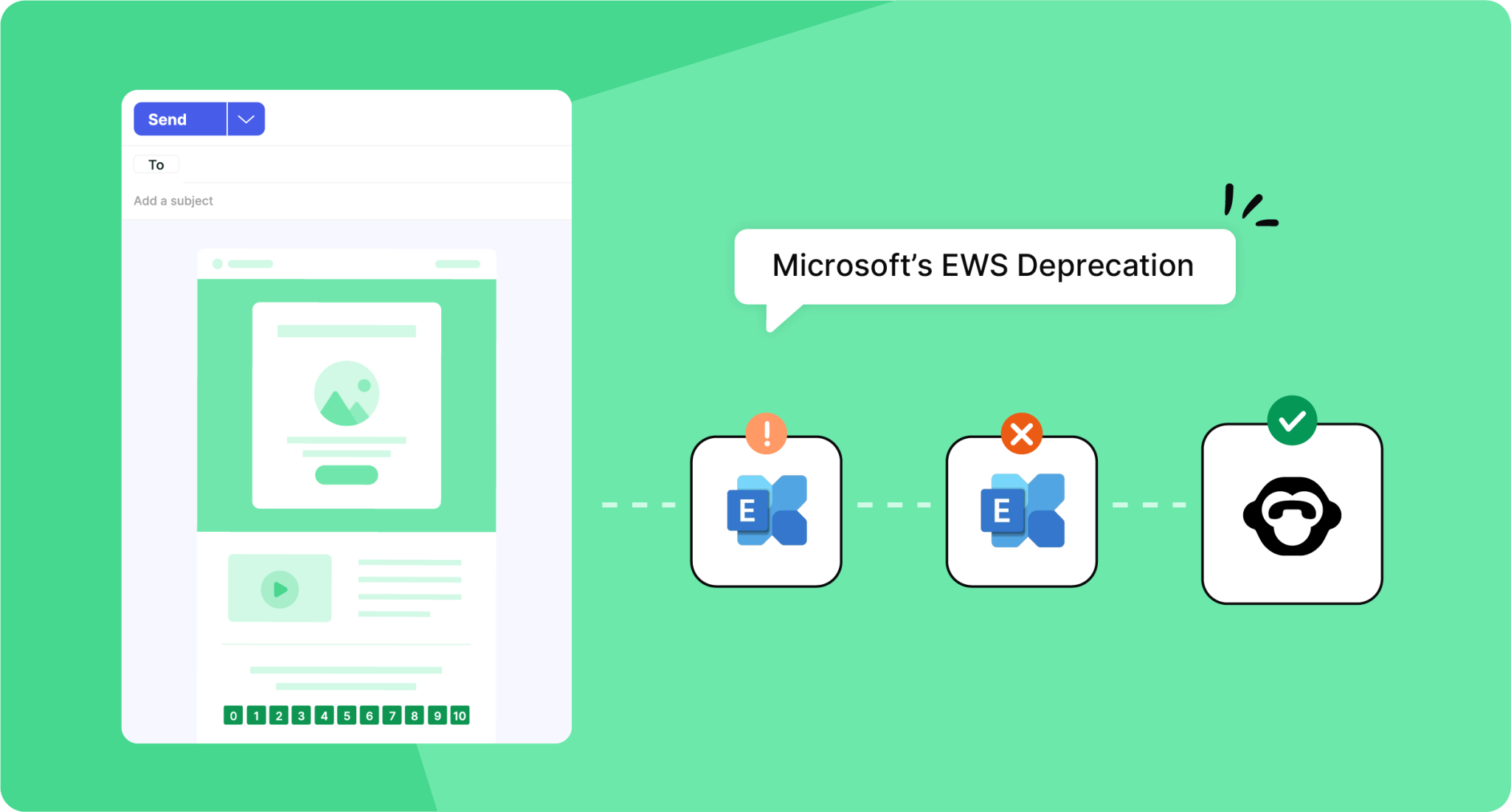
Microsoft is retiring Exchange Web Services (EWS), the behind-the-scenes technology that many email platforms use to connect to your company’s Microsoft environment. How your vendor has responded to that deadline tells you something important about how they manage technical risk on your behalf.
Here is what is happening and what to look for.
What is EWS, and Why is Microsoft Retiring It?
Exchange Web Services is a protocol Microsoft built nearly 20 years ago to allow third-party applications to communicate with Exchange mailboxes. In practical terms, it is the connector that lets tools like internal communications platforms read and send through your company’s Microsoft email system. For a long time, it was the default integration path for email analytics, internal communications platforms, and productivity tools across the Microsoft ecosystem.
Microsoft first signaled this change in 2018, when it announced that EWS would no longer receive functionality updates. In 2023, Microsoft confirmed that EWS would be formally disabled in Exchange Online in October 2026. A security incident in early 2024 added urgency to that timeline.
The Midnight Blizzard incident involved EWS and prompted Microsoft to accelerate its effort to remove dependencies across its own products and the broader third-party ecosystem. In short, the old connector has become a security liability, and Microsoft is closing it down for good.
The successor is a combination of Microsoft Graph and the Exchange Online Admin API, both of which are modern API’s built to meet current security and scale requirements. Microsoft Graph and the Exchange Online Admin API have reached complete feature parity for the vast majority of EWS scenarios.
The new connector is ready. The question is whether your vendor has switched to it.
What is the Timeline for EWS Retirement?
The retirement follows a phased schedule with firm, non-negotiable dates.
According to Microsoft, starting October 1, 2026, EWS will be disabled by default across Exchange Online tenants that have not explicitly chosen to preserve access. Starting April 1, 2027, EWS will be fully and permanently shut down, with no exceptions granted past that date.
For IT administrators evaluating vendors ahead of that deadline, there is also a preparation window to be aware of. Organizations that configure an app Allow List and set EWSEnabled to True before the end of August 2026 will be excluded from the automatic disablement that takes effect on October 1.
Vendors that have not completed their migration by that point create real risk for the organizations depending on them.
What to Ask Your Internal Communications Vendor During Platform Evaluations
Not every platform has moved at the same pace. Before committing to a tool, it is worth asking directly whether the vendor has completed its migration from EWS to the Exchange Online Admin API, and whether your organization will see any disruption before or after the October 2026 deadline.
ContactMonkey has already completed that migration. When you evaluate us, you are evaluating a platform built on Microsoft’s current infrastructure standard, with no deprecation risk on your timeline.
For the full technical detail on Microsoft’s plan, including administrator guidance and the API parity roadmap, see Microsoft’s official documentation here and the Exchange Team’s announcement post here.
With the October 2026 deadline closer than it looks, now is a good time to evaluate platforms that are already on the right side of the transition. Book a demo to see ContactMonkey in action and get your questions answered by someone who knows the Microsoft stack.