“Will AI replace me?”
It’s the question many internal communicators are asking.
The truth is, though, AI won’t replace you. Instead, internal communicators who learn how to use AI will replace those who don’t.
“Yes, AI will take on some of our most routine tasks, and it’s tidy to assume that, in the absence of these tasks, we will have more free time for ‘strategy and creativity.’ But that forces a bigger, more uncomfortable question: what makes our human insights actually valuable?
The truth is that AI isn’t changing communications work FOR us – it’s changing it THROUGH us. That means communicators need to be central to the conversation – not passive recipients of whatever IT rolls out. The advantage is going to go to communicators who understand that AI is going to do more than just change our workflows – change people’s expectations about authentic messaging versus automated messaging.
The most important “new” skill for comms isn’t just using and building expertise with AI tools; it’s evolving our expertise to stay ahead of what the technology reveals about our real value. And leaning into those things.” – Rebecca Bultsma, AI Ethics Researcher & Adoption Strategist
And that’s not a threat. It’s an invitation.
Now is your chance to step forward, close the confidence gap, and lead the AI conversation inside your organization.
Myth vs. Reality: What AI Really Means for Comms
Let’s start by busting a myth. AI isn’t here to take your job. It can’t understand workplace culture, nuance, or human emotion the way you do.
What it can do is take on the things humans are naturally slower at:
- Typing at lightning speed. Generating multiple draft subject lines or first-pass copy in seconds.
- Processing massive amounts of information. Analyzing thousands of survey comments or email analytics without breaking a sweat.
- Remembering everything. Storing patterns, past insights, and preferences so you don’t have to start from scratch every time.
- Catching errors. Avoiding typos, and identifying mistakes that the human eyes and mind may miss (it happens to the best of us).
Where humans bring context, empathy, and strategy, AI brings scale, speed, and memory. Together, you cover each other’s limitations.
AI is a co-pilot, not a competitor.
Why Internal Comms Should Lead the AI Conversation
The temptation is to wait until IT, HR, or leadership drives the AI conversation. But here’s the opportunity: internal comms are perfectly positioned to lead.
- You know how messages land (or don’t) across the organization.
- You understand employees’ preferences, pain points, and channels.
- You’re already the bridge between leadership and the workforce.
AI adoption is not just a tech rollout, it’s a communications story. And communicators who step up now become trusted advisors on how AI fits into the employee experience.
Closing the Confidence Gap: AI Literacy Without the Jargon
Here’s the best news: you don’t need a technical background to start using AI.
AI literacy simply means you know:
- What it can do (help draft, personalize, and analyze content at superhuman speed).
- What it can’t do (replace empathy, context, or judgment).
- How to test it safely (start small, measure, learn, share wins).
Think of it this way: AI handles the heavy lifting. You bring the humanity.
Where to Start: An Editorial Assistant That Catches What You Can’t
For many communicators, there’s real anxiety involved in their role. Before deploying an email or newsletter, the fear-provoking thoughts that circulate sound like “What if I miss something before I hit send?” “What if I make a typo when sending on behalf of the CEO?” “Did I update the date everywhere?”
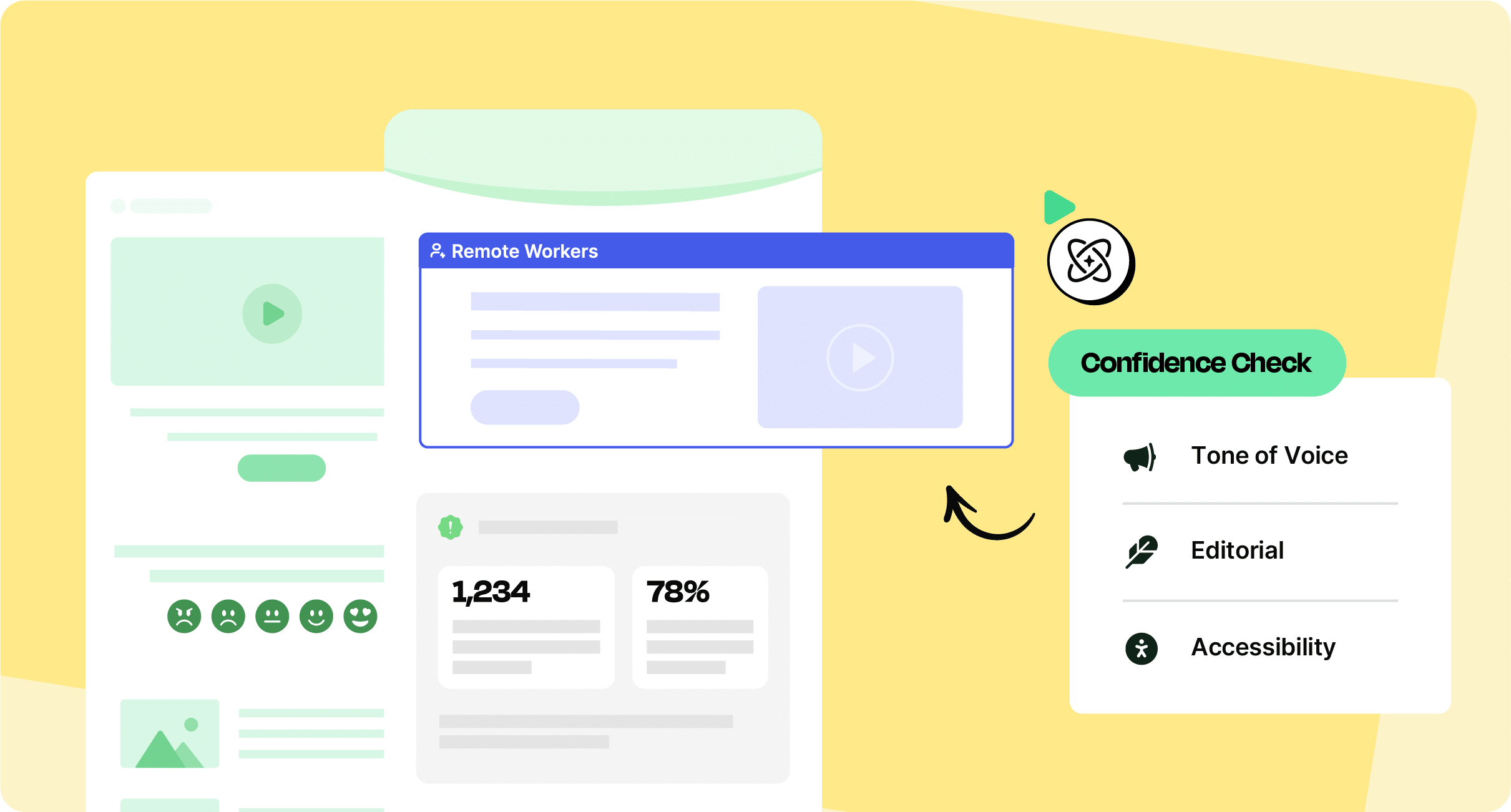
That’s where an AI-powered editorial assistant becomes your ultimate safety net. Consider it a meticulous editor who never blinks, never gets tired, and never overlooks a detail, no matter how small.
Before you launch an important email, your AI assistant can:
- Catch the easy-to-miss errors. Typos, stray copy-paste issues, or inconsistencies that slip past even the most careful human eye. AI can flag them instantly, so you know what truly needs attention.
- Validate numbers, dates, and logic. Is the time zone calculation correct for employees in Toronto and Sydney? Do the percentages in your summary actually add up to 100? AI can double-check the math and logic before it ever reaches an inbox.
- Verify consistency across details. If you mention a deadline in one section, does it match the date in another? Are names, job titles, or key terms used consistently throughout the message? AI cross-checks related information to ensure it all lines up.
- Surface factual accuracy you can trust. From numerical relationships to timelines, AI can raise flags when something doesn’t add up, giving you a chance to fix it before it creates confusion or mistrust.
By unleashing the “power of AI” in this way, you’re not handing over your judgment. You’re simply gaining a confidence layer that eliminates the “what if I missed something?” anxiety every communicator knows too well.
Your Role as an AI Trailblazer
Every workplace will have its “AI moment.” The moment leadership asks, “Should we use AI in our communications?”
When that question comes, the communicator who has already tested, learned, and can speak from experience is the one who earns trust.
AI doesn’t just make your job faster. It makes your role more strategic.
By leaning in early, you become the AI trailblazer inside your organization.
Turn AI into your editorial assistant. Discover ContactMonkey’s latest AI features by booking a 15-minute obligation-free chat!